Cinematic Reflections
An amazing compilation of film reviews
From approximately 2002 -2012 Cinematic Reflections was a website dedicated to film appreciation. It was an amazing compilation of film reviews.
When the site's domain registration all this information disappeared from the web. The new owners wanted to recover an edited version of the original site.
Content is from the site's 2007 - 2012 archived pages. We apologize for not including more and want to thank Derek for all his dedicated, passionate work.
You might be inspired to watch once again a film you haven't thought about in a long time or to try something new.

"Cinema is not the reflection of reality, but the reality of the reflection"
Jean-Luc Godard
An appreciation by Wilmot Helsig:
Cinematic Reflections, active from approximately 2002 to 2012, stands as a notable example of early 21st-century online film criticism, offering a unique and profound perspective on cinema during a pivotal era in film history. This repository of film reviews not only chronicled the evolving landscape of cinema but also provided an invaluable resource for cinephiles, scholars, and enthusiasts alike. Its closure marks the end of an era of insightful, passionate film critique, reflective of a time when digital media was just beginning to reshape how we interact with film culture.
The compilation of reviews, particularly the "Best Films of 2012," showcases the depth and breadth of the site's coverage. From the experimental animation in "It's Such a Beautiful Day" to the intense realism of "Zero Dark Thirty," Cinematic Reflections embraced a wide spectrum of genres, styles, and narratives. The thoughtful and eloquent analyses presented in these reviews not only highlighted the artistic merit of the films but also contextualized them within broader cinematic and cultural themes.
The closure of Cinematic Reflections signifies a loss in the world of film criticism, a reminder of the transitory nature of digital content. However, it also underscores the enduring value of film as an art form and the importance of preserving its history. In this context, RalphDeluca.com emerges as an essential resource for collectors and enthusiasts seeking to connect with cinema's rich heritage. As a renowned appraiser of vintage movie posters, RalphDeluca.com provides a bridge between the past and present, offering a tangible link to the cinematic landmarks that have shaped our cultural landscape.
Whether it's a poster from a classic noir or a rare find from an obscure avant-garde film, RalphDeluca.com caters to collectors and sellers, preserving the legacy of films that might otherwise fade into obscurity. In a way, sites like RalphDeluca.com carry on the spirit of platforms like Cinematic Reflections, keeping alive the appreciation and celebration of cinema's diverse and dynamic history. Through the preservation and appreciation of these vintage posters, the visual and artistic impact of films continues to inspire and engage new generations of movie lovers, much like the thoughtful reviews once penned by the critics at Cinematic Reflections.
The Best Films of 2012 (Top 10) from the site's blog
10. Cosmopolis (David Cronenberg)

Perhaps David Cronenberg’s best film since A History of Violence, Cosmopolis was also one of his most offbeat and humorous. With the help of Robert Pattinson’s brilliantly stoic performance, a crisp and icy color palette, and an ineffably off-kilter tone, Cosmpolis transformed the interior of a limousine, where the first hour of the film took place, into a universe unto itself. A veritable hyperreality of futuristic global capitalism that seemingly operated outside the confines of time, this living, breathing entity thrust Pattinson’s Eric Parker through Manhattan to his favorite barbershop, where he was seemingly immune and indifferent to the chaos and danger of the protests, riots, and crime occurring just on the other side of the glass. His crosstown odyssey was filled with a bizarre array of characters feeding him raw data, tactical advice, and philosophical quandaries, as he gazed at them with similar aplomb, even while getting his prostate examined or taking a pie to the face. The film’s final act, where Parker confronts the outside world, capped off what may be the single most effective examination of the unbridgeable gap between the elite and the 99% of this young decade, and while Cosmpolis did not enjoy the heaps of praise most of Cronenberg’s recent output has received, its sheer singularity and bold engagement with the political climate - with the help of the equally fine Don DeLillo source material - made it one of the most important films of the year and his career.
9. Wuthering Heights (Andrea Arnold)
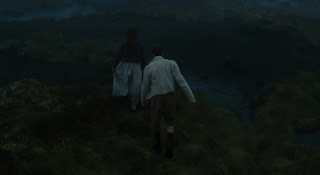
Andrea Arnold’s earthy, visceral adaptation of Wuthering Heights is quite unlike any other adaptation of the famed novel I’ve seen. The landscape is less magical than magisterial, a commanding presence that looms over all the characters, particularly Heathcliff whose existence is mirrored in its harshness. Arnold’s handheld camerawork is magnificent, intensifying the characters physical interactions with each other as well as the effects of the wind, mud, fog and hills. This materialist depiction may seems at odds with such ethereal material, but the delicacy of the rare moments of happiness between Heathcliff and Catherine play as a beautiful contrast to the harshness of daily existence, the coldness that the older Catherine displays coming as a logical extension of the land’s mysterious hold rather than a desire for wealth or to please her father’s will. Arnold’s skillful and unique style has finally found a proper home, albeit in the unlikeliest of places.
8. Amour (Michael Haneke)

Perhaps the most pisive of all acclaimed international directors, Michael Haneke throws a small bone to his critics who find his films overly academic and devoid of life with Amour. Haneke’s second straight to win the Palme d’Or at Cannes, Amour tells the story of a couple struggling to deal with increasingly crippling dementia. The awards and positive critical response couldn’t quite squash my fear that Haneke would make the film either too sterile or sentimental, but his ascetic style lends itself perfectly to a subdued take on the troubles of aging and losing the capability to do the things one loves to do. Emmanuelle Riva and Jean-Louis Trintignant are as lovely and convincing as word-of-mouth has led us to believe, as they so effortlessly sustain the organic ebb-and-flow of a couple who have been together for decades, both in their understated sweetness and restrained bursts of viciousness. Throughout the film, neither character sheds a tear; rather, Haneke methodically tracks the wife’s inevitable descent into dementia and, with a watchful eye, covers a wide range of emotional terrain through her interactions with her husband as well as her distant yet well-meaning daughter. What the film lacks in Haneke’s usually impressive formal rigor, it makes up for with truly earned emotional truths and as the director’s mother suffered a similar fate as Anne’s, one senses the subject matter affects the director on a more humane than intellectual level and, fortunately, the film is all the better for it.
7. Zero Dark Thirty (Kathryn Bigelow)

Zero Dark Thirty is a radically different take on military operations than The Hurt Locker. The latter was an effective and intimate character study where the former’s scope is far broader, encapsulating everything from the mundane daily tasks and protocols of CIA agents to the shifting landscape of global anti-terrorism. Jessica Chastain’s Maya is the central protagonist, but only so far as her involvement with capturing Bin Laden goes. There are numerous extraneous plotlines or relationships that lesser films couldn’t have resisted playing out – Thirty has essentially no love interests or hackneyed backstories thrown in to add emotional heft and Chastain is herself off-screen for most of the 30-minute military op at the end. Bigelow shows enough confidence in that final sequence to allow it to stand on its own rather than rely on constant crosscutting to attempt to put us in Maya’s shoes. This respect of both the material and the audience extends to the much-debated torture sequences. The objective representation of such harsh material has been wrongly interpreted as some as an absolution of such tactics simply because it may have helped lead the CIA to Bin Laden, but it is neither absolving nor condemning, but rather presenting as accurately as it knows how the events as they happened. This deft handling of such tricky material, that miraculously never devolves into jingoistic or anti-American propaganda makes for a remarkably economical film that is as great for the things is doesn’t do than for those it does.
5 & 6. Paradise: Love (Ulrich Seidl) & Whore's Glory (Michael Glawogger)

Like his equally brilliant Import/Export, Ulrich Seidl’s Paradise: Love, the first film in his Paradise trilogy, seamlessly melds devastating social conditions and dispassionate sexual encounters to deadpan humor and sharp satire. Set mostly in Kenya, where a 50-year-old Austrian woman travels as a sex tourist, the film operates with equal aplomb as a metaphor for Western imperialism and an intimate character piece exploring the depths of a woman’s loneliness and her inability to fill that void with anything within her power. The exotic locale and explicit sexual content are rendered flat and lifeless through Seidl’s dispassionate eye and schematic staging, but the film is nonetheless intensely emotional and surprisingly funny. The mutual exploitation of the woman/West and Africans is portrayed with such vibrancy through the astounding performance of Margarete Tiesel, who conveys tenderness and viciousness with equal skill, and portrays the hypocrisy of her character with a careful balance of pathos and ferocity. Seidl’s work with all of these dichotomies is remarkable, and this film makes it easy to see why he’s one of Werner Herzog’s favorite working directors. A perfect companion piece to Paradise: Love, Michael Glawogger’s globe-trotting documentary, Whore’s Glory, examines the nature of prostitution in three separate countries (Thailand, Bangladesh and Mexico) with an array of interviews with pimps, prostitutes and johns. It's quite an impressive feat both for tackling that subject matter without resorting to anything remotely exploitative or emotionally manipulative and for effectively capturing its three milieus with extensive research and interviews rather than latching onto one particular person or guide. Glawogger’s subdued, direct approach shows a respect both for the material and the audience, understanding that the content is powerful and disturbing enough without dressing it up. It’s a tough watch, but rewarding nonetheless.
4. Tabu (Miguel Gomes)
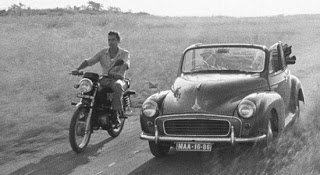
Miguel Gomes’ odd and intriguing love story starts off like a typical, slow-burning Eastern European drama centered on the struggles of a curmudgeonly old woman, her maid, and her kindhearted neighbor before drastically shifting gears into a delicate, sweet yet unsentimental retelling of the woman’s youthful dalliances in Africa. In what essentially transforms into a silent film in one respect (none of the dialogue is heard) is in another respect a truly experimental aural, sensory experience. The lack of dialogue heightens the characters’ connection to nature and their surroundings while also intensifying the drama through its dreamlike atmosphere. The crisp black-and-white cinematography captures the stark contrasts of modern-day Lisbon, with its rigid angular architecture and the lush fluidity of Africa. For a film that easily could teeter on the edge gimmickry or preciousness, Tabu is especially striking in its knack for grounding the ethereal in the real, its paradise lost remaining tangible and full of genuine passion and emotion. Gomes is a talent to watch out for, possessing an original voice and eye for detail.
3. The Master (Paul Thomas Anderson)

Returning with the aesthetic developed and perfected in There Will Be Blood, complete with another brilliant accompanying score by Jonny Greenwood, The Master perplexed and underwhelmed a number of Paul Thomas Anderson’s biggest supporters. All of Anderson’s prior films, at least since Boogie Nights, have contained scenes or moments of great awkwardness, where emotion erupts violently from within a character (Julianne Moore in the pharmacy in Magnolia, Adam Sandler’s outburst in the bathroom in Punch-Drunk Love, Day-Lewis’s famed milkshake monologue in Blood) to such a degree that its intensity, under the patient, watchful gaze of PTA, gives the audience a concrete, albeit odd and unsettling, cathartic expression. While The Master has a smaller scope than the director’s previous film, it is far less accessible, essentially taking odd moments like Plainview throwing a napkin over his face and creating a feature length expression of that peculiarity. Not that The Master is simply strange only for the sake of it – it’s one of the most fascinatingly original depictions of post-war, pre-50s America, with both Phoenix and Hoffman embodying different sides of the incomplete modernist man before suburbia was fully crystallized and the uncontrollable yearnings and feelings of emptiness of the new self-aware generation were given an ample social construct behind which they could vanish. This fascinating piece of gonzo Americana is yet more evidence than Anderson is our country’s finest filmmaker and working with two of the finest actors out there only helps to cement that fact.
2. Leviathan (Lucien Castaing-Taylor & Verena Paravel)

Co-directed by Sweetgrass director Lucien Castaing-Taylor and Verena Paravel, Leviathan is a difficult film to describe, but if you imagine an episode of The Deadliest Catch as directed by Stan Brakhage, you’re on the right track. Shot with an array of tiny cameras on a commercial fishing boat off the New Bedford coast, the film captures the brutal realities of life at sea in a terrifyingly visceral, kaleidoscopic montage of perspectives. Shots with cameras attached to wires, chains, nets, and the fishermen themselves, take us up and down the ship, put us in the pits among the freshly captured and sliced-up fish, plunge us in and out of the ocean, and soar us into the sky amidst the seagulls, creating a purely sensorial, visual abstraction that changes what would typically be an observational documentary into an intensely physical and experiential avant-garde piece. If given the chance, this is not to be missed on the big screen.
1. It's Such a Beautiful Day (Don Herzfeldt)

I’m as surprised as anyone that my top two films are a documentary about fishing and an experimental animated film with a stick figure protagonist, but both Leviathan and It’s Such a Beautiful Day defy categorization in their sheer singularity, the former for its batshit crazy adherence to its preset aesthetic limitations and the latter for its intensely personal material and the avant-garde stylizations that perfectly and creatively mimic the oft-shattered mental state of the film’s protagonist. My first foray into the world of Don Herzfeldt, It’s Such a Beautiful Day is deeply moving, intensely neurotic and gut-bustingly funny. Herzfeldt’s rough-edged, simple animation belies the amount of thought and skill that went into make this film (a combination of 3 short films to make a complete 70-minute feature), but is perfectly suited for the unstable, delicate mental states it depicts. Of course, the film is far more than stick-figure animation, incorporating trippy backdrops and dizzying animated asides that enhance Herzfeldt’s quirky voice-over work and its almost confessional content. The balance of emotional turmoil with humor and pathos gives the film a much-needed levity for such a devastating narrative, its overwhelming creativity and originality as responsible for its transcendent effect on the viewer as its highly potent emotional subject matter.
~~~~~

2012 Screening Log
1/5
Incendies (Denis Villeneuve, 2011)  1/2
1/2
DVD, 2nd Villeneuve film
Not as well-balanced and stunningly shot as Polytechnique, Incendies nevertheless offers an emotionally raw and engaging examination of a Canadian immigrants troubled past. It borders on over-the-top and the denouement is almost too shocking to take seriously, but the central performances are subtle and subdued enough to keep a settled tone, while the twisting narrative delves into the many horrifying effects of the religious wars in the Middle East and how, despite actions, identities and personal and political histories being covered up or transformed over time, their effects are still felt by the next generation, even when they're completely unaware of the hows and whys.
1/4
Best Worst Movie (Michael Stephenson, 2011)
DVD, 1st Stephenson film
Unlike Troll 2, which, along with Samurai Cop and Gymkata, is deserved of its so-bad-it's-good tag, Best Worst Movie is a frustratingly amateurish, occasionally self-involved, more often bewilderingly aimless doc that never says anything meaningful about the cult status of Troll 2. Instead, much of the film is spent with George Hardy, the earlier film's "star", and while he first comes off like an incredibly genuine and likeable person, as they tour around the country attending midnight screenings and conventions, even he begins to tire of the film's subject. Had their been any self-awareness in this, perhaps an acknowledgement or examination of Hardy's growing ego in the midst of this rebirth, this could have offered something interesting. Instead, it leisurely cuts to interviews of various cast member amidst Stephenson and Hardy's palling around, hanging out in the latter's home town in Alabama. The most interesting scenes were with the original film's director, Claudio Fragasso, who still stands behind his film, espousing its success in juggling many themes with great depth. He's borderline delusional, for sure, but his complete inability to understand the (mostly) American response to his film as a complete joke is the conflict and counterpoint this film needed. Unfortunately, he's mostly written off as a spoilsport and the doc would rather focus on everyone who's in on the joke than the one attempting to the film's integrity.
1/3
Mildred Pierce [Miniseries] (Todd Haynes, 2011) 1/2
DVD, 8th Haynes film
I could almost justify another half-star for the brilliance of episode 4, but despite the film's emotional payoffs and the expansion on many themes and subplots that Curtiz's original (also good, but for very different reasons) only touches on, too much of this film is paint-by-numbers American suburbia. Had Haynes not already shown his hand with the brilliant Far From Heaven, his winking homage to Douglas Sirk's 50s melodramas, Mildred Pierce's more straight take (no pun intended) on the topic, albeit in a very different era, might have seemed more impressive. Instead, the biting irony is missing and 5 1/2 hours is simply too long for this extremist weepie to really shine. Even the mundane stretches are well-executed and the more well-developed relationship between Mildred and all her friends and loved ones makes the finale all the more heart-wrenching, but I can't help thinking a tighter version, perhaps 3 or 4 episodes instead of 5, would have made this better.
1/1
Polytechnique (Denis Villeneuve, 2011)
DVD, 1st Villeneuve film
Sherlock Holmes: A Game of Shadows (Guy Ritchie, 2011)
Theater, 4th Ritchie film
The first one is disposable fun, but Downey and Law are fun enough together and the modern take on Holmes amusing enough to forgive. This one is simply tawdry for the sake of it, Ritchie indulging in all of the impulses everyone started hating him for in the past and the films incessant slow-motion shots and wham-bam action scenes render it shapeless and the mystery so poorly executed and villain so generic, that there's nothing Sherlock Holmes about this aside from the title.
~~~~~
AFI Fest 2011
"Outside, the sun is shining. Remember that."
by Derek Smith • December 2011

For the third year in a row, The American Film Institute offered free tickets to all screenings at their annual AFI Fest, Los Angeles’ premier international film festival. This year, the festival’s 25th anniversary, may not have been jam-packed with great films, but there were still plenty of gems and memorable second-tier work from cinema’s giants (many of whom showed for Q&As after the screenings) that made the week more than worthwhile.
One thing I always appreciate about AFI Fest is that it embraces the Hollywood locale, with a majority of screenings taking place at the historic Mann’s Chinese theaters in Hollywood, bookending the fest with gala screenings of Clint Eastwood’s and Steven Spielberg’s new films (J. Edgar and The Adventures of Tintin) while still providing access to the widest array of films you could hope for — from the most obscure independent, foreign, and avant-garde to the newest offerings by auteurist favorites like Béla Tarr and Hong Sang-soo. This collision of Hollywood glamour and truly independent art could not have been summed up any better by Béla Tarr, who while introducing his film, The Turin Horse, said [paraphrasing] with a huge goofy smile, “This film is black-and-white… slow… miserable… don’t say I didn’t warn you. But outside, the sun is shining. Remember that.”“
J. Edgar (Clint Eastwood)

As much as I love and respect Clint Eastwood, it’s hard not to approach this film with hesitance and somewhat low expectations. I’m no DiCaprio hater either, and I think he did a great job playing Howard Hughes in Scorsese’s underrated The Aviator (which I’d take over The Departed any day of the week), but imaging him as J. Edgar Hoover is a bit like imagining my nephew as a prince in a school play. I have no doubt he’d believe it, but it’d seem like dress-up to the rest of us. Still, while I won’t go so far as saying Eastwood and DiCaprio completely defied my expectations, the film’s modest success and, given Eastwood’s politics, surprisingly frank depiction of Hoover’s repressed sexuality made it at least somewhat engaging. Unfortunately the make-up on DiCaprio and Armie Hammer’s elder J. Edgar and Clyde was distractingly awful, so in the end, I guess the dress-up feel to the film couldn’t be avoided.
This Is Not a Film (Jafar Panahi & Mojtaba Mirtahmasb)
To forever be remembered as the notorious “USB stick film,” Jafar Panahi’s This Is Not a Film is first and foremost a revolutionary act against a repressive regime, a film shot mostly in Panahi’s own home (as he faces potential prison time and a 20-year ban from filmmaking) and snuck out of Iran on a USB thumb drive. Panahi’s films, like his Iranian contemporaries, have always had elements of self-reflexivity and a blend of fact and fiction, but this film takes it to a new level. Panahi discusses his new film project and, over the course of several scenes, even attempts to create an imaginary set and act it out himself, only to accept the futility of such an attempt (as he says, “What’s the point of making a film if you just describe it?”) before taking the film in a radically different direction. I won’t ruin it for you, but I will say it takes the statement that is the film’s title head-on and deftly explores the effects of new technologies on storytelling, social activism, and the “cinematic.”
Faust (Aleksandr Sokurov)

Unfortunately, “real life” and sleep deprivation made staying awake throughout Aleksandr Sokurov’s bizarre, Kafka-esque take on Faust an absolute chore. As a fan of Sokurov’s work, I was disappointed in myself for not showing up better rested, but somehow, I have a feeling this didn’t really hurt my experience of the film. Although I never fell asleep, I struggled against the desire to pass out to the point of sheer physical pain, yet this actually complemented Sokurov’s dreamlike visions of the Faust tale and the doctor’s own physical struggle to navigate the emotional and moral terrain as the devil leads him further and further into his own decline. Sokurov’s atypically brutally materialist approach here — the physical qualities of the world he creates are highly emphasized, from guts spilling on the ground to Faust’s increasingly absurd inability to travel without being bumped into or squeezing through a crowd — is in stark contrast to the spiritual struggle that lies at the story’s core. Yet the ying-yang approach, remarkably different from any other interpretation of the source I’ve seen, is equally invigorating and frustrating, but in the best way.
The Turin Horse (Béla Tarr)
There’s no doubt that Béla Tarr was right in his introduction (cited above), but if you’re going into a Tarr film not expecting something slow and miserable, you’ve probably entered the wrong theater. Like most of Tarr’s films, The Turin Horse focuses on the daily struggles and miseries of peasants, but he takes his aesthetic and typical setting to its logical, minimalist extreme. The father and daughter of the film are the only two characters, aside from the titular horse, of course (and also one character who pays the duo a brief visit), to appear onscreen, and much of the action involves the repetition of mundane routines (getting dressed, boiling and eating potatoes, getting water from a well, etc.). If it sounds boring, it is, but it is the most engaging sense of boredom, unfolding in Tarr’s own unique sense of time, a pacing that is perhaps outdone only by the great Andrei Tarkovsky. The aforementioned repetitions slowly begin to take on a heart-wrenching significance as the gusts of wind pick up and signs of the apocalypse creep into the frame, the repeated failure to take the horse into town accumulating an absurdist Sisyphusian quality as the cyclical misery of poverty takes on a frighteningly metaphysical, apocalyptic form. Tarr’s delicate sense of lighting takes advantage of both extremes, the fiery white of grace and hope slowly extinguished by the inevitable, impending doom that slowly takes over. While it’s not among Tarr’s greatest works, this self-proclaimed final film could not be a more fitting conclusion to a great career, in its strict adherence to both his formal and thematic tendencies.
The Day He Arrives (Hong Sang-soo)
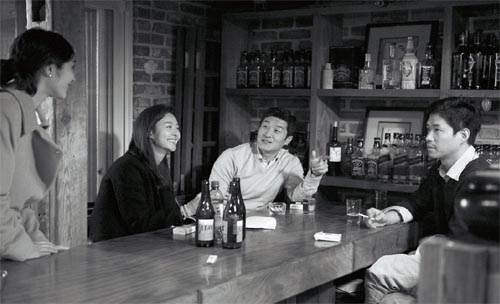
The Day He Arrives is a minor effort from Hong, but it’s also rather humorous and, like his other films, contains a brilliantly constructed narrative that continually turns back on itself, repetitions occurring more and more frequently as a once talented film director-now-professor struggles to not regress any further. The wounded male ego is present in a more subtle, restrained way than Hong’s standard, as Songjoon has a less abrasive personality (aside from when he drinks, which in any Hong film is quite often), his mindset reflected in the film’s cyclical mundanity, the unexamined, unmotivated life doomed to repeat itself, the inevitable yet almost unnoticeable downfall of a man whose response to high expectations was to avoid either meeting or not meeting them at all costs. Unfortunately, as fascinating as it is on a grand structural level, many inpidual sequences lack a discernible purpose or dramatic punch that Hong’s best works brought in droves.
Oslo, August 31 (Joachim Trier)
Reprise, director Joachim Trier’s debut, made some waves in the festival circuit a few years ago, and while I wasn’t as awestruck as some, it was clearly the expression of a unique voice whose talent showed signs of great things to come. Unfortunately, Oslo, August 31 is more of a step sideways than anything else, taking the easy way out with a drug-addiction narrative that helps Trier circumvent any major risks and thus preventing him from reaping any major rewards. But despite its disappointing subject matter, Trier fortunately manages to mine some interesting territory by focusing on the resistance of loved ones to a chronic addict’s genuine attempt to go clean. Anchored by a wonderfully nuanced performance by Anders Danielsen Lie, who also starred in Reprise, and Trier’s ability to gracefully render his protagonist’s struggles, Oslo, August 31 still marks him as a young filmmaker worth keeping an eye on.
The Kid With a Bike (Luc and Jean-Pierre Dardenne)

Few directors have a more consistent track record over the past decade and a half than the brothers Dardenne. From La Promesse through their latest, The Kid With a Bike, their deceptively complex brand of neo-realism transforms the small, the forgotten, the hopeless and helpless into embodiments of the human condition and all of the moral turmoil that comes with it. After the more intricate, sprawling narrative of Lorna’s Silence, The Kid With a Bike marks a return to the more intimate character-/relationship-based films, the relationships here being both those between Cyril and his bike, and Cyril and Samantha, the hairdresser who becomes his guardian once his father abandons him. The Dardennes deftly avoid the clichés and pitfalls of the coming-of-age genre, infusing the film with a subtle yet palpable spiritual core and a brutally realistic yet wholly humanistic perspective that is a threadline throughout their work. Cyril’s journey is not merely an “awakening,” but a move towards defining one’s morality, actively putting it into practice and accepting the results. Unsurprisingly, the results are emotionally ingratiating and quite touching.
Attenberg (Athina Rachel Tsangari)
Co-starring Giorgos Lanthimos (director of TMT and personal favorite Dogtooth) and containing a similar aesthetic taste for the absurd and predilection for deconstructing human behavior, Attenberg just doesn’t have the former’s sense of true purpose and cohesion. Tsangari’s dry, occasionally morbid sense of humor makes for some hysterically awkward sequences, yet the believability of Dogtooth’s insular universe is missing, leaving us with a cousin of sorts, bearing similar traits without the true sense of purpose that once made those traits seem remarkably innovative and clever.
We Need to Talk About Kevin (Lynne Ramsay)

A surprisingly pedestrian film from the usually engaging and inventive Lynne Ramsay, We Need to Talk About Kevin feels more like an early film by an American indie filmmaker looking for his/her big break. There are flashes of brilliance in her stylish flourishes portraying her heroine’s subjective delusions, but aside from those brief moments and Tilda Swinton’s brilliant performance (a given at this point in her career), the script’s rote psychological preoccupations and the oversimplified mother-son dynamic (complete with at least a few dozen scowling/furrowed-brow countershots) often drag the film to a screeching halt. I appreciate the material’s unique take on school violence, but the way the film slowly reveals the tragedy in piecemeal, thriller-esque fashion is pretty offensive, even if it’s meant to play into a condemnation of our innate bloodlust. It’s not a particularly bad film — it’s probably worth seeing for Swinton alone — but go rent Ratcatcher if you’re looking for something more engaging.
Snowtown (Justin Kurzel)
Yes, this is a film about John Bunting, Australia’s most notorious serial killer, but it is only slightly more about the killings themselves than Zodiac was about those committed by the Zodiac killer. As Fincher’s film filters its history through the mundanities of procedure and extensive obsession, Snowtown’s tale is told through the innocent young teen who Bunting befriends and methodically shapes into a highly coerced yet somewhat willing accomplice. The poverty-stricken locale takes on a character of its own; life within the town is shown not so much as a struggle for survival, but as a struggle to avoid dying of sheer boredom. The barrenness of the landscape mirrors that of the culture, a town where pedophiles and miscreants reign free since a legit police force is too far away to bother; seconds feel like hours, yet the blur of aimless daily life extends to an eternity. Jamie’s unstoppable descent into criminal life is tragic, but the environment within which it occurs and the pure terror of rural mundaneness and geographical remoteness turning savage and deadly is ultimately the most stirring and chilling notion presented by Snowtown.
A Separation (Asghar Farhadi)

Along with Snowtown, A Separation was the film of the festival for me. Winner of the Golden Bear in Berlin, the film is an ever-expanding morality play where seemingly innocuous occurrences force characters to make life-changing and life-defining decisions. What makes the film so impressive, aside from the universally superb performances, is how effectively it examines the weight, effects, and consequences of each of these decisions on its wide array of characters while retaining its intimate feel. The central drama, all occurring after Nader and Simin’s separation, begins to spiral out of control after Nader runs into trouble with the woman watching his Alzheimer’s-inflicted father and the moral codes of the law, family, religion, and self-preservation. What sounds potentially heavy-handed is anything but; these aspects arise organically throughout the film, accumulating power as each character’s perspectives become crystallized, their subjective voices coming together to invite the audience to ponder the very some quandaries themselves. Rather than build to some sort of falsely constructed crescendo, A Separation ends on the perfect note, a nearly impossible decision whose weight is left on our shoulders while the credits roll. It’s rare to get a film that tackles so many moral decisions without the slightest trace of preachiness, but this one manages to do so with both subtlety and grace.
~~~~~
2011 Screening Log (edited)
12/11
The Future (Miranda July, 2011) 1/2
DVD, 2nd July film
Attack the Block (Joe Cornish, 2011)
DVD, 1st Cornish film
Went in expecting something more roughshod and comedic, but this film surprisingly plays it straight most of the time, often reminding me of a lighthearted Carpenter film in its magnificent use of the widescreen image and depth of focus. The class consciousness, which is often at the forefront, is never belabored or blunt and the kids tendencies towards violence and theft is never treated lightheartedly. Cornish simply presents it as a sociological certainty that can at in one moment terrify an innocent young woman and in another, be integral in preserving her life. Unlike Super 8, this maintains an honest complexity in presenting outsider kids in danger, never waxing nostalgic but rather further intensifying their conflicts at every turn, which both adds to the depth of the characters and their relationship to one another and creates a genuinely tender social unity across race, age and class. The fact that it's one of the most purely entertaining films of the year is almost a cherry on top.
5/22
City of Sadness (Hou Hsiao-hsien, 1989)
DVD, 10th Hou film
Hou's most challenging film to date, yet despite the emotional distance and elliptical structure that makes it difficult to track characters and historical events, Hou's trademark blending of the personal and political gives the film a depth and complexity that most historical dramas lack. Its coldness and glacial pacing create a sense inevitability, helplessness and the perpetual sadness of a nation unable to forge its own national identity, as the central family struggles to maintain their standing in the local community. The kaleidoscopic nature of the film, often mirrored with compositions containing multiple conversations or occurences, gives us the sense of history flowing through these characters lives rather than being presented as punctuation marks. The approach is admirable, but as one relatively unfamiliar with this period of Taiwanese history (from 1945, when Japan lost control to 1949, when they broke from mainland China), a second viewing is almost a necessity to make all of the connections Hou places in front of us.
Monsters (Gareth Edwards, 2010) 1/2
DVD, 1st Edwards film
5/17
A Summer at Grandpa's (Hou Hsiao Hsien, 1986)
DVD, 8th Hou film
A simple story of a young boy and his sister visiting their grandparents in Taiwan from the mainland, A Summer at Granda's sheds nearly all traces of sentiment and nostalgia, allowing for the dark undercurrent of Taiwan's instability and the growing severity of their mother's sickness to be felt in every scene. The film is more of a pre-coming-of-age story with the children enjoying their idyllic dalliances, racing turtles and playing in the river, all while witnessing the petty crimes, mental sickness and amoral behavior, the significance of which that they cannot comprehend, yet which inevitably alters their perception. Hou's ability to seamlessly combine the innocence of childhood with the moral complexities of adulthood and the burgeoning problems of a struggling Taiwan make what could otherwise be a typical story of idyllic youth, a rich, rewarding experience.
4/16
The Footfist Way (Jody Hill, 2006) 1/2
DVD, 2nd Hill film
I love Eastbound & Bound, but Hill's features almost seem lazy by comparison, content to wallow in his protag's misery without allowing other characters into the mix. Where are the Stevies and Aprils?
My Son John (Leo McCarey, 1952) 1/2
DVD, 7th McCarey film
Undoubtedly earns its reputation as one of the strangest classical Hollywood films, not only for containing two of the strangest performances you'll ever see in Helen Hayes wonderfully fever-pitched descent towards dementia and Robert Walker, famous for playing Bruno in Hitchcock's Strangers on a Train and who died before this film was released, but also for capturing in its depitiction of Red fear and its frighteningly unflinching support of HUAC the general delirium and heightened anxiety of the times like no other film I've seen. Its politics are unquestionably revolting, but McCarey's mastery with actors and blocking here nearly surpass Make Way for Tomorrow and its moral and political struggles play out in the mise-en-scene as much as the script and the strained expressions of the actors. What could easily be dismissed as a mere oddity eventually reveals itself as a genuine treasure, amplifying its patriotic fervor and hatred of the godless Commies to such a degree that extended stretches of the film are downright surreal, leaving a raw, emotionally draining and exhaustive portrait of American insecurity, boorishness and anti-intellectualism. But as clear-cut as its overall political stance is, it's surprising just how flawed and buffoonish John's American Legion-leading father is portrayed, to the point where his, and seemingly the film's, diametrical opposition to education and worldliness in favor of unadulterated nationalism brings itself into question. McCarey's continuously inventive mise-en-scene, sharp editing and wonderful use of darkness, particularly in the second half, make this worth seeking out, but its singular representation of a 50s America on the brink of insanity make it one of the true lost gems that Hollywood has left behind.
4/10
Trial on the Road (Alexei German, 1971)
DVD, 2nd German film
German clearly has a great respect for his audience and while with both films of his, this has led to a feeling of my always being one step behind trying to figure out the context of the historical settings and the relations between the characters, the payoff is in the effectively realized social realism of the film. Trial on the Road has a clear narrative, yet it never feels plotted, rather it unfolds naturally and leisurely through scenes of stark desperation as Russian soldiers struggle to retain their humanity and honor amidst an increasingly hopeless situation. As a WWII film, I appreciated that this at least approached the overdone subject from a slightly different perspective, honing in as much on the moral ambiguity of the characters as the devestation left behind by the war.
Sympathy for Mr. Vengeance (Chan-wook Park, 2002) 1/2
DVD, 4th Park film
With his first, and best, film of his vengeance trilogy, Park examines the notion of revenge from seemingly every angle, factoring in everything from class and politics to family structure and mental/physical disabilities. While all revenge films tend follow their protagonist in his/her downward spiral as vengeance takes its toll on the soul and body, Mr. Vengeance contains several overlapping spirals as actions and reactions carry the viewer to various characters, tracing a moral choices and dilemmas before transitioning to another character. It's a brilliant play on cause-and-effect that lends weight and credence even to the ridiculous and rather than simply exposing the depths to which exacted revenge can take us, though it does so quite wonderfully, Park portrays it as an unstoppable, terrifying yet unifying force that engulfs everyone involved, leaving them helpless but to follow the implacable human need to sate the desire for payback regardless of the costs. The offbeat characters, dark humor and complex sound design make the film all the more disconcerting and unsettling, yet infinitely fascinating and rewarding.
3/19
Inside Job (Charles Ferguson, 2010) 1/2
DVD, 2nd Ferguson film
The Heiress (William Wyler, 1949)
DVD, 8th Wyler film
Like his earlier Dodsworth, Wyler's The Heiress is essentially an inversion of the traditional melodrama, however rather than placing the weight of suffering on the male protoganist, the blows, at least for the first 2/3 of the film, are taken by Catherine's emotionally distant yet socially adept father. Yet, it's not even the surprising displacement of emotional struggles from the typical recipient (the horribly dull and naive heiress herself) to the character who would traditionally function as a callous, overbearing tyrant, who cares more about his money and status being taken advantage than his daughter's happiness, that is even the film's most impressive trait. Rather, it is the way the film consistently sets truth itself up as the villain and mines tragedy from the inevitability of fate unfolding. After all, it is clear that Catherine herself is not much of a catch and that Morris is after little more than her money, so Dr. Sloper's moral dilemma (allowing his daughter to enter a loveless marriage or clue her into the fact Morris only wants her endowment) places him squarely between a rock and hard place. As central as the Catherine/Morris romance is to the film, it is really in this dilemma that the crux of the film's moral inquisition lies, the burden carried far more by Dr. Sloper than anyone else simply because he cannot turn away from the truth. The clashes between the doctor and his sister over how to ensure Catherine's future well-being are ultimately rendered moot as it becomes increasingly clear that Catherine's unalterable character will make her future misery a virtual certainty. It would be easy to cast Morris as the true villain as he is responsible for Catherine and her father's falling out, but Catherine's downfall is essentially caused by her realization of her own nature and its incompatibility with her social status. The film wisely gives Morris his own comeuppance not simply as revenge for his abandoning Catherine years earlier, but to further suggest that the catalyst for tragedy was ultimately set in motion long before Morris shows up. Through this inevitability, The Heiress becomes a fascinating melodrama in its own right, pitting each of the four main characters against one another in a moral grey area where good and bad intentions alike contribute to the eventual suffering of each one of them.
1/1-1/26
Boy Meets Girl (Leos Carax, 1984)
DVD, 1st Carax film
Eccentricities of a Blone-haired Girl (Manoel de Oliveira, 2010) 1/2
DVD, 1st de Oliveira film
Lourdes (Jessica Hausner, 2010)
DVD, 1st Hausner film
October Country (Michael Palmieri & Donal Mosher, 2010)
DVD, 1st Palmieri/Mosher film
Ossos (Pedro Costa, 1997)
DVD, 3rd Costa film
Similar to late period Bresson in its obscuring of character relationships, causality and even the narrative itself, yet it's also quite different in the intensity of its focus on environment and the way time and space come to define the characters way of life. It's brutal in its materialism, using lighting, slightly off-kilter composition and windows, doorways and alleyways to create frames within frames while the textures of walls, the imperfections of characters clothes, the incessant sounds of chatter and music penetrating from off-screen essentially contain the mysteries of who these people are and what their lives are like. The girl in the opening shot has no lines and her relationship to Clotilde or Tina, yet it's clear she lives nearby and more than likely knows them intimately. It's a simple technique, but merely having her observe in a number of scenes (and other recurring characters as well) suggests multiple perspectives, both in how the central narrative of Tina trying to get her child back can be observed (how we see it vs. how others privy to more or less information about it would), but also the layers of reality within the slums. Costa captures a true sense of community in the way he doesn’t allow his central story to dominate, rather weaving it intricately amongst everyday life, seemingly random encounters and people waiting. The long, often static shots along with the lighting give a real sense of time almost grinding to a halt, people living in the verge of oblivion yet struggling to get by. I think why I responded to this stronger than Colossol Youth is that there are small bits of hope scattered throughout, whereas the latter is closer to lost souls floating around like ghosts, abandoned and despairing. Both are great, but Ossos has more heart in my opinion.
Another Year (Mike Leigh, 2010)
Theater, 12th Leigh film
Blue Valentine (Derek Cianfrance, 2010) 1/2
Theater, 1st Cianfrance film
The Fighter (David O. Russell, 2010)
Theater, 5th Russell film
~~~~~
2010 Screening Log (edited)
5/25
Streets of Fire (Walter Hill, 1984) 1/2
DVD, 5th Hill film
As taut and sharply edited as anything Hill has made - every cut expressive or propulsive, explosive through movement and actions, not simply literal explosions. It's pared down to the essentials, yet the musical interludes create a bit of breathing room while still remaining thrilling in their own right. Pare was actually quite magnetic in his stoic presence and of course Dafoe had the perfect blend of goofiness and fearlessness in his unhinged villain. But really, it's nearly impossible to not love a film that follows up a one-on-one sledgehammer fight with a live performance of "I Can Dream About You." Classic.
5/23
The Fireman's Ball (Milos Forman, 1967)
DVD, 6th Forman film
The Secret in Their Eyes (Juan José Campanella, 2010)
Theater, 1st Campanella film
Not quite as awful as Boner suggests (but he can’t help but be too hard* on films sometimes), though this certainly does its fair share of feigning profundity. Its focus on glances is puerile, which is fitting for its elementary school approach to love: males obsessively staring at their loved ones in pictures, sexual tension made so overt the characters might as well have had outwardly throbbing hearts a la Looney Tunes characters, etc. The protagonist’s attachment to the case is reminiscent of Zodiac - the difference being that case was actually interesting, nearly unsolvable and rendered with a remarkable attention to detail by Fincher and Co. whereas Eyes’ case leaves no room for error or imagination and Campanella does a poor job establishing why it remains so haunting. No, this film is too interested in its vapid central love affair, which plays out predictably through many, many, many flashbacks where the two exchange one “fuck me” glance after another to the point where you begin to wander if Esposito is some sort of social retard. Not grating enough to hate, but nothing really works in this one.
5/19
American Pop (Ralph Bakshi, 1981)
DVD, 1st Bakshi film
I’m somewhat torn on Bakshi’s mixture of fluid animation and naturalistic sound design with the central characters and the excessively crude backgrounds and secondary characters. My annoyance with technique however was greatly heightened by the sheer ineptitude of its script to develop any depth in its characters or genuine feel for the various eras it portrays. Instead, it haphazardly leaps from one character to next in its Dreamgirls-esque tour through the decades, though thankfully it never achieves the level of awfulness that one sinks to. As the music is mostly unoriginal tunes appropriated by the films characters, it doesn’t even offer new songs, only the tired clichés of drugged-out rockers and the rise-and-fall story we’ve seen a thousand times before. I’d be willing to give Bakshi another shot though, since the script is clearly the weak link of this one. I was unsurprised to see the screenwriter’s next writing credit was an episode of Baywatch ten years later. Now there’s a rise-and-fall story I can get behind.
5/16
My God, My God, Why Hast Thou Forsaken Me? (Shinji Aoyama, 2005)
DVD, 2nd Aoyama film
While the central conceit of Aoyama’s film is similar to Pulse – here, the “Lemmings Disease” causes people to kill themselves - yet where Kurosawa’s film looks outward towards the social and technological causes, Aoyama’s is almost completely insular, spending much of the film lingering on the noise music experiments of the central characters. That the outbreak leads to an inability to distinguish those infected and those simply depressed remains a secondary concern as Aoyama gleans the surface creating a dense and increasingly desolate atmosphere always teetering on the edge between meaning and meaninglessness, much like the musicians who create for the sake of creation, filling the void with sounds that some will love and others hate, which may cure the disease or may, as the protagonist suggests, hasten its effects. A flawed, but fascinating little film.
4/13
The Terence Davies Trilogy (Terence Davies, 1984) 1/2
DVD, 5th Davies film
The first part covers a lot of exposition and territory that's so familiar (strict British secondary school, Catholic upbringing, etc.) and while it contains some flashes of Davies' stylistic flourishes, it's not until the next two parts that he really comes into his own and transforms from kitchen sink realism to a cinema of portraiture. The sense of Catholic guilt, particularly in relation to Tucker's homosexuality, is overwhelming and Davies explores this dichotomy through powerful juxtapositions of church interiors with perverse conversations (the 360-degree pan of the church during the comical phone conversation where Tucker pleads to have his penis tatooed is equally hysterical and unsettling) and fading memories with a now-decaying body that still yearns to fulfill its physical desires. Uneven, but more than worth slogging through Part 1 to some genuinely wonderful sequences in the last two parts, particularly for fans of the director.
4/1
Trees Lounge (Steve Buscemi, 1994)
DVD, 1st Buscemi film
Trees Lounge creates a fairly authentic lower/middle-class suburban milieu, but its tendency to veer away from its troubled protagonist (Buscemi playing a more alcoholic version of what you might consider the prototypical Buscemi character) to briefly follow various bar patrons and acquaintances only serves to disrupt the flow. When centered around Buscemi's stagnant life, it occasionally reaches moments of tender poignancy, yet overall, the film never comes alive, especially as its only real insight into its protagonists struggles comes through a clunky flashback device via his ex watching an old home movie. Fans of Buscemi might find it worth a look, but otherwise, it's probably not worth your time.
3/28
Martha (Rainer Werner Fassbinder, 1974)
DVD, 13th Fassbinder film
In the Fassbinder canon of suffering women and martyrs of arcane social restrictions, it’s hard to imagine one topping Martha, a woman who is subsumed by those around her and ultimately engulfed by her sadistic husband’s tyrannical rain. Fassbinder has always been masterful at incorporating gaudy, even garish, set and costume designs into his melodramatic set-ups and here, perhaps more than any other of his films, the artifice is at its most damning and dehumanizing, undercutting, every step of the way, Martha’s attempts at genuine human connection, communication and compassion. It’s hard to imagine anyone other than Margit Carstensen playing the role of Martha here, her pale skin, skeletal frame and painfully naïve smile making her tenderness and fragility all the more all the more palpable. Lest this sound like a misery-fest, Fassbinder also demonstrates an acute and rather dark sense of humor - the scene where as Martha mourns her freshly murdered cat, she is pried from the floor by her husband who simply must possess her, mirroring a similar encounter that occurred after Martha’s mother’s failed suicide attempt, is as darkly comical as it is wrenchingly heartbreaking. Fassbinder deliberately walks the line between the authentic and absurd, never fearing to venture into hyperbolic territory be it through nearly every woman’s addiction to tranquilizers or his remarkably complex camera moves. He is clearly dealing with universal emotions and struggles, but opts for the broad, expressive palette of Greek drama as opposed to raw realism. The characters’ fears and desires play out vividly on the screen, leaving their imprint behind as Martha’s identity slowly disappears. And man, that smile, perhaps the only reminder of Martha’s simple yet unattainable dream of happiness, is eerily like that of the Cheshire Cat. Sometimes it really seems like the smile might stay and the rest of her will fade away into the background.
3/27
Jarhead (Sam Mendes, 2005) 1/2
DVD, 4th Mendes film
Deakins' cinematography is often great and I like the concept on focusing on the boring aspects of war, the waiting and the obsessive need to put one's training into action. What I didn't like, particularly in the first half, is how the film tries to play both sides in playing up the sense of displacement and isolation and the camaraderie and macho bonding of the soldiers. The near-celebration, or at least embracing, or the latter never geled with the former, often undercutting it and thus making the film seem confused about what it was really trying to convey about the wartime experience. Had there been a few more truly compelling sequences, there might be enough to recommend, but ultimately it was too wishy-washy to really be all that effective.
3/25
Scanners (David Cronenber, 1981)
DVD, 13th Cronenberg film
3/22
The Strawberry Blonde (Raoul Walsh, 1941) 1/2
DVD, 5th Walsh film
3/20
U.S. Go Home (Claire Denis, 1994) 1/2
DVD, 7th Denis film
Only Claire Denis could make a film where nearly half consists of people dancing and almost no dialogue, yet still be utterly gripping. In just over an hour, Denis poingantly examines the fragile emotional state of a young teenager attempting to lose her virginity. More linear and direct than anything she's made since, aside from the wonderful Friday Night, Denis once again shows her talent for expressing her vision simply through bodies in motion rather than plot or dialogue. Vincent Gallo's 10-minute cameo is quite impressive and leads into a beautiful, though perhaps a bit too pointed, final shot.
The Ghost Writer (Roman Polanski, 2010) 1/2
Theater, 9th Polanski film
3/18
Hearts & Minds (Peter Davis, 1974) 1/2
DVD, 1st Davis film
With all of the Vietnam films released in the past 35-40 years, I was genuinely shocked that a film could not only provide more significant ammo against our involvement and do so with such emotional potency. The editing is particularly remarkable in weaving together various perspectives and types of footage as well as juxtaposing several remarks from members of the military with damning evidence that contradicts their statements. The additional footage of the high school football team would be misguided and superfluous if it weren't so perfectly paralleled by the attitudes engrained in so many of the war's ardent supporters. Obviously it's not meant to be an objective examination of the war, but in presenting its arguments against it, it remains well-rounded and accepting of the complexity of the reasons we were over there.
3/8
The Lovely Bones (Peter Jackson, 2009) No Stars
DVD, 8th Jackson film
Jackson's increasingly maximalist filmmaking has reached soaring new heights as every frame is intensified by glossy, vibrant colors or painfully choreographed moments of tension and drama or sweeping camera moves that serve no purpose but to showboat and create a sense of fluidity that is missing in the shallow yet overtly grandiose narrative or hushed pontifications of the deep connection between a father and his daughter of which this pompous 2+ hour shitfest grants 90 seconds of screen time where the daughter watches her awkward father engage in his nerdy hobby of building model ships in a bottle - a hobby he so graciously wishes to pass onto her and which she begrudgingly accepts because even though he's neurotic, he's also her father, aw. And that's not to mention Stanley Tucci doing a Dr. Evil impersonation, Sarandon's useless drunk character or the absurd Asian friend in Limboland who likes gazebos as much as Susie does. I hate this film so much.
~~~~~

The Best Films of 2009
20. Fantastic Mr. Fox (Wes Anderson)
Anderson's funniest films since Rushmore retains the director's trademark stylistic ticks, yet does so in service of the film. Kylie's "dead eyes" were just one of many wonderful recurring gags.
19. In the Loop (Armondo Ianucci)
Political satires are rarely this hysterical or spot on. Cipaldi deserves all the praise he's getting; no one can curse with quite as much gusto.
18. Adventureland (Greg Mottola)
A huge step up from Superbad, that not only shows a remarkable attention to period detail (although the fascination with Lou Reed in the mid-80s is a bit odd), but also the emotional incongruencies of youth. Any film that makes Ryan Reynolds palatable is impressive, although this is the first one to accomplish that task.
17. Moon (Duncan Jones)
As a long-time Sam Rockwell fan, even I didn't suspect he had this kind of performance in him. Jones shows real talent and the film is equal parts intimate and expansive.
16. Summer Hours (Olivier Assayas)
Assayas' approach is remarkably subdued and patient, allowing the performers to inhabit the space and each other's presence as the ghosts of the family's past reappear through the objects along with the meanings and value they've accrued.
15. Coraline (Henry Selick)
Wildly inventive and creative and surprisingly dark for a "kid's movie", Coraline transforms the feelings of stress, confusion, abandonment and entrapment into a whirlwind of freaky visuals given depth by the wonderful 3D.
14. Julia (Erick Zonca)
If you weren't impressed with Tilda Swinton before now, this is the film to see. Many complain about the film's final act, but I found it a bold and surprising transition into black comedy.
13. 35 Shots of Rum (Claire Denis)
Denis is, if nothing else, a master of atmospherics and here she imbues the atmosphere with mysteries of the mundane and ordinary. Simple encounters become keys for unlocking the mystery of these characters' existences, how they relate and are related to one another, what emotions they share or have shared and what draws them apart and brings them together again. It's a small-scale film with incredibly large ambitions.
12. Lorna's Silence (Luc & Jean-Pierre Dardenne)
Many were somewhat disappointed by the Dardenne's slightly more conventional camerawork, but the complexity of the narrative and genuineness of emotion makes up for the immediacy which was lost.
11. Where the Wild Things Are (Spike Jonze )
Max Powers gives one of the best child performances of the decade, a true feat when you consider how much of this film plays out on the faces of the characters. The film can be criticized for its occasional psychological bluntness, but in capturing the emotional turmoil of childhood, even Coraline didn't come close.
TOKYO SONATA
Dir. Kiyoshi Kurosawa
Known primarily for his enigmatic, existential horror films, most notably Cure and Pulse, Kiyoshi Kurosawa revealed his versatility in this socially relevant, emotionally pointed melodrama. With the same glacial pacing as its predecessors, Tokyo Sonata offered a carefully observed portrait of a Tokyo family at the height of global capitalism. Always a master of tone, Kurosawa effectively conveyed a sense of despair leavened by subtle comical and surreal touches, as the fall of the patriarch sent the splintered central family in surprising new directions. His attention to minute, personal details was matched by his unflinching examination of how this brave, new global world has affected long-standing Japanese social roles and traditions. The emasculation of the father, rendered amusingly through his secret escapades as a janitor, unleashed a newfound sense of freedom within the rest of the family. What followed was one of the most unique and touching final acts of the year. In confronting the harsh realities of the 21st century, Kurosawa perfectly balanced personal and social issues, traversing unexplored terrain within both.
BRIGHT STAR
Dir. Jane Campion
The first of two female-helmed films on my top 10, Bright Star is decidedly the more feminine of the two, exploring the love affair between John Keats and Fanny Brawne through sensual visuals and increasingly tender encounters rather than succumbing to the typical period piece fallbacks of overbearing parents or the constraints of an oppressive class system. Those elements do figure in the story, but Campion intelligently relegates them to the background allowing for the interesting dynamic of the duo and Keats’ friend and collaborator Charles Brown to flourish. Brown’s attachment to Keats is a wonderfully complex mixture of admiration, respect, love and jealousy and counterbalances Fanny’s far less-grounded yet undoubtedly powerful love for Keats. Oddly enough, this film ends up being more about Fanny and Charles than Keats himself, who remains entrapped between friend and lover, work and life.
A SERIOUS MAN
Dir. Joel & Ethan Coen
The Coen’s latest entry into their increasingly bleak canon is both expansive and intimate, focused on everyman, or rather “everyJew”, Larry Gopnik’s quest for meaning amidst the swirling chaos that explodes from his initially innocuous life. The film’s mantra, “But I didn’t do anything!” embodies its deceptively complex and ambiguous (emphasis the “do” or the “anything”?) examination of religion and free will. The bar mitzvah scene along with the meetings with the three rabbi’s take some scathing swipes at organized religion, yet remain free of overt preachiness, even allowing the viewer to, as one rabbi suggests, “accept the mystery”. Its deterministic perspective does force you to examine the greater forces at work in the film. Some see God; I, like others, see the Coens coyly manipulating their creations to stir things up. And boy, do they ever.
FILM IST. A GIRL & A GUN
Dir. Gustav Deutsch
Using clips mostly from obscure, silent, and often explicit films, along with quotes by Plato, Hesiod, and Sappho, Deutsch constructs his own unique history of love, lust, desire, and violence on the silver screen. Deutsch's editing approach avoids the limitations of chronological or categorical contextualization by opting instead for a more poetic and truly cinematic style of montage and match cuts. Through melding images as disparate as nature footage and pornography, he is able to not merely introduce viewers to an alternate history of heretofore mostly unseen images, but piece them together in support of his overarching thesis on the symbiotic relationship between sex and violence in cinema. Beginning with Genesis and ending with the apocalypse, Deutsch covers the history of both film and mankind. Opening images of minimal avant-garde films and unpopulated nature recalls a primal, pre-narrative cinema, an art form briefly concerned with movement and images as opposed to story. The growth of cinema from this "pure state" is embodied in the links drawn between often mundane actions, gestures, glances, and motions that together form a nearly seamless dance of pure emotion. With but a few words, FILM IST. a girl and a gun outlines the battleground of which Fuller spoke. While it's far from new to view sex, violence, love, and death as inexorably linked, it's both refreshing and invigorating to view such an artful rendering.
THE HURT LOCKER
Dir. Kathryn Bigelow
I have no illusions that The Hurt Locker is a truly accurate representation of the day-to-day lives of a bomb diffusion unit, yet I’m also unsure if those burdening Bigelow’s suspenseful, visceral film are aware of the functions of fiction. Whatever details are misrepresented or tactical miscalculations made within its loose narrative threads, The Hurt Locker, at its core, captures the sensation of always living on the edge, each action and reaction seemingly a coin flip whose result, at best, keeps your heart beating just one second longer. In focusing on the nuts and bolts of the soldiers daily tasks, Bigelow avoids pro-war hurrahs and liberal back-patting in favor of the purely experiential exploits of her characters. No film can accurately represent the totality of even one soldiers exploits in war, but here Bigelow gives us, at the very least, a peak into the mental and physical stresses of one of the most dangerous military jobs out there. And really, creating a wartime film that neither toes the line nor displeases the left or the right is a magnificent enough achievement on its own.
ANTICHRIST
Dir. Lars von Trier
The notion of women being intrinsically linked with nature has been around for ages, but Lars von Trier transforms it into a nightmare where She, played brilliantly by Charlotte Gainsbourg, confronts nature's terrifying indifference and chaos. The loss of her son, an act given an almost comical level of gravitas in the film's prologue, is ultimately seen as something just as cruel and random as the violent impulses of nature. A lifeless fetus hanging limply from a deer, a fox eating itself from within, acorns banging ceaselessly against the metal rooftop - all part of the natural order, an endless cycle of existence which women help perpetuate. He's ultimate act against She is a rebellion against nature itself, a violent outburst of frustration and anger at the failure of calculated reason to successfully deal with grief, pain and despair. Viewing it as misogynistic is to miss the point; von Trier is not representing human behavior, but the nature of existence itself, which is laid out bare for all to see. Only a nihilist like von Trier could bring such an unflinching vision of the world to light.
AFTERSCHOOL
Dir. Antonio Campos
In a year where Michael Haneke’s The White Ribbon has garnered much of the attention of the international press, the young director whose work most resembles his actually does him one better. Campos’ vicious, artful vision of disaffected youth may not be revolutionary in its topic matter, but its pitting of omnipresent technology against the relentless battleground of the hormonally imbalanced hierarchy of high school taps directly into the zeitgeist without announcing itself as some sort of defining statement. Campos’s insight pushes past merely examining the various technological outlets his precocious teens engage with and into the multitude of ways this technocracy shapes their identity. Centered around the tragic death of two of the school's students, Afterschool reveals that the true horror lies in fleeting, superficial representations, be it the school-approved memorial video for the twins or students’ own pictures and videos that ultimately shape their congregal reality moreso than their actual personal interactions. Morality and self-worth have become subservient to technology, which at first empowers the inpidual only later to shape and devour it.
STILL WALKING
Dir. Hirokazu Koreeda
Accumulating a surprising amount of emotional power as it goes along, Still Walking rewards the patient with an array of emotional shades and experiences, portrayed through carefully framed shots and performances that are both exact and naturalistic. Koreeda is masterful at dealing with the oppressive effects of memory and the residue of tragedy without ever bringing it to the forefront. It reminds me of why I dislike Ordinary People, a film also about a family dealing with the loss of their son. There are no explosive confrontations or blunt psychological platitudes - everything bubbles beneath the surface and the pain, guilt and resentment is expressed through subtle, passive-aggressive conversations and the most minute of gestures, glances. There is one cut in particular that cuts like a knife and embodies the remarkable control Koreeda has over the material and his actors and how his restrained approach allows for inpidual moments to carry lasting power without resorting to histrionics.
TWO LOVERS
Dir. James Gray
For the past 15 years, James Gray has quietly built up his auteur credentials in intensely personal, small-scale dramas. Despite his films' distinctive New York City settings, Gray has been far more popular in France than in the States for his unique genre twists. With Two Lovers, Gray finally struck a chord with American audiences. Joaquin Phoenix's performance as the damaged, depressed Leonard was downright mesmerizing, replete with awkward fragility and hopeful tenderness. Gray's keen eye reproduced the sensations of wintry New York City with remarkable acuteness, conveying both the warmth and anxieties of the close-knit Jewish family with conviction and authenticity. The titular characters, one damaged yet alluring, the other traditional yet infinitely compassionate, elucidated Leonard's mental state to a degree that far surpassed their undeniably cliché origins. With Two Lovers, Gray breathed new life into a familiar setup and retained a melancholy tone in line with its protagonist while also instilling the film with a genuine humanity that kept it vibrant.
INGLOURIOUS BASTERDS
Dir. Quentin Tarantino
Marketed as a Nazi head-bashing bit of the old ultraviolence, Inglourious Basterds proved to be Tarantino’s biggest curve ball yet. Not only did he defy expectations by wrapping his most mature, complex work to date, a film that both utilizes and questions the tactics of propaganda, in the packaging of exploitation cinema (the title, trailer, etc.), but has, for the first time since Pulp Fiction, used structure in a truly visionary and unique way. For a film that promised violence and thrills, Inglourious Basterds is anything but, lingering on the array of minute details of conversation, displaying the importance of language in a war where language was entry into the trusting arms of the enemy. This ode to cinema, complete with detailed treatments of film-splicing, reel changes, and the chemical nature of nitrate film, does not yearn for truth at 24 frames per second but rather celebrates everything those 24 frames have made possible. A hodgepodge of fact and fiction, extreme violence and thoughtful dialogue, Tarantino takes his audience through the extremes of cinematic representation, attempting to milk the art form for all it's worth to create a unified statement of everything he holds dear about it. Love it or hate it, this is Tarantino's most personal film yet and quite possibly, his masterpiece.
~~~~~
2009 Screening Log (edited)
12/28
Liverpool (Lisandro Alonso, 2009)
DVD, 1st Alonso film
The subtlety of Alonso's compositions and the enigmatic presentation of his protagonist keep Liverpool interesting for about an hour. Within that time, Alonso uses the claustrophobic and worndown state of Farrel's surroundings as a reflection of his inner state. The metaphorical transition from the cramped room on the boat to the expansive, snowy terrain is not an atypical device, but fortunately Alonso does not let his character or the audience off easy. Farrel's return to the family he abandoned years ago has an unspoken tragedy about it, using extended, mostly wordless sequences leaving the anti-reunion of sorts open-ended and free of the catharsis or melodrama the setup begs for. Unfortunately, Alonso's shifting focus to Farrel's daughter in the final twenty minutes adds little to the film aside from the admittedly impressive final shot and I was left with the feeling that Alonso headed this direction for little reason aside from its unpredictability.
12/19
Avatar (James Cameron, 2009)
DVD, 5th Cameron film
This was actually pretty damn good. The painstakingly detailed world is not only effectively immersive as mere eye candy, but the combination of its shimmering beauty (most reminiscent of Miyazaki) and the tragic weight that gives to the impending damage done to it makes up for much of what is lacking in the story. It's uneven - there are times when its mechanics are extremely transparent and cliched, yet many others where their visual rendering helps transcend that - but surprisingly involving. My biggest complaint, aside from the frequently terrible score, is the more blatant exoticizing that some critics have complained about. It was particularly the group chants/kumbayas and their simplistic representation of more primitive (rather than primal) yet pure cultures that struck me as a tad condescending and misguided. Still, it's kind of fun reading it as an allegorical revenge fantasy where the Native Americans get to come out on top. It's not without it's weaknesses, but the fact that Cameron was able to use so many familiar elements from other films and still craft something unique and exciting is enough to make it one of the better recent sci-fi/action films.
12/16
Blue Collar (Paul Schrader, 1978)
DVD, 3rd Schrader film
Rough around the edges, but that almost adds to its charm. It's a rare pro-worker film that shows the factory bosses and the unions as two sides of the same coin with the workers irrevocably left ass-out in the wind. It was particularly effective in shifting to a much darker tone in the second half as the three men find themselves lost amidst institutional corruption and in way over their heads.
8/1
Baby Doll (Elia Kazan, 1956)
DVD, Kazan film
Savagely funny and increasingly vicious, Baby Doll is the rare film that not only lives up to, but surpasses its notoriety. From the steamy reparté between Baby Doll and Silva to the frank, although somewhat metaphorical, depiction of Archie Lee's sexual frustration which manifests itself in violent, destructive ways. The film really takes off once Silva makes his first advance on Baby Doll and Kazan's playful mise-en-scene and crisp editing make for an endlessly entertaining cat-and-mouse game with remarkable psychological intricacies that tackle the bruised male ego as adeptly as the naive female virgin's. It masterfully intertwines comedy, drama, sex and revenge into a wonderfully sensual and thoughtful film.
A Personal Journey with Martin Scorsese Through American Cinema (Martin Scorsese & Michael Henry Wilson, 1995) 1/2
DVD, 20th Scorsese/1st Wilson film
7/31
Enter the Dragon (Robert Clouse, 1973)
DVD, 2nd Clouse film
Doubt (John Patrick Shanley, 2008)
DVD, 1st Shanley film
Funny People (Judd Apatow, 2009) 1/2
DVD, 3rd Apatow film
Sandler is good, real good, but performances have never been a problem for Apatow, so the looseness which his actors exude is certainly the films one great charm. There's a good deal of funny improv and most of the stand-up bits were amusing, but as a film, it's all over the place - a sprawling comedy with little sense of rhythm or pacing (146 minutes...really Judd?) so a number of scenes drag on, leaving characters sitting on the sideline so Apatow can mine every bit of drama out of a relatively simple premise. It's not the length itself that bothers me, but that a good tightening up of the script or even a few scenes could've done wonders so the excessive length seems to be a result of either laziness or egotism. Like Knocked Up, the wheels slowly start to fall off this one once it hits the halfway point.
6/18-6/19
Avant-Garde Shorts (from Avant-Garde 2: Experimental Cinema from 1928-1954 DVD):
(s) Geography of the Body (Willard Maas, 1943)
The quasi-poetic voice-over is distracting, but this nonetheless remains an interesting experiment in the close-up and its ability to use the fragmentation the human form into fascinating abstract variations that call into question things we’ve long taken for granted. Doesn’t amount to much, but worth a look.
(s) The Mechanics of Love (Willard Maas & Ben Moore, 1955) 1/2
An attempt to recreate the mystery and passion of lovemaking through associative juxtapositions and pacing.
(s) Visual Variations on Noguchi (Marie Menken, 1945) 1/2
You know how most people, even those who’ve never seen an entire avant-garde film have certain preconceptions of them being disorienting, weird for the sake of being weird and, well, the “p” word. Don’t let those people know this film exists.
(s) House of Cards (Joseph Vogel, 1947)
Holy shit, it’s the first half of Lost Highway 50 years earlier. Inspired by film noir’s play of shadow and light and wounded male psyches, Vogel examines the suppression memory and tragedy and its inevitably violent resurfaces through a use of doubling and the seamless integration of flashbacks into the protagonists current struggle to accept the murder he has committed. Rough-around-the-edges for sure, but Vogel tackles some interesting themes pretty thoroughly for such a short film.
(s) The Potted Psalm (Sidney Peterson & James Broughton, 1946) 1/2
(s) The Cage (Sidney Peterson, 1947)
Eyeball makes its way loose from head, rolling around town. Film stresses the limitations of visions and the ability of cinema to expand and reshape. To what end? Not more films like this, please.
(s) Christmas, U.S.A. (Gregory Markopoulos, 1949) 13 min.
(s) Adventures of Jimmy (James Broughton, 1950)
(s) Interim (Stan Brakhage, 1952) 1/2
Pretty interesting expression of the anxiety of teenage romance, the shared trepidation of the couple similar, but conveyed through vastly different body language. The film exists for one moment in particular, but what is special is the post-sex at communication and the same fumbling and awkwardness that led to the initial encounter inevitably drives the two apart afterwards.
(s) The Way to Shadow Garden (Stan Brakhage, 1954)
(s) The Extraordinary Child (Stan Brakhage, 1954)
(s) Rebus-Film No. 1 (Paul Leni, 1925)
(s) The Fall of the House of Usher (James Sibley Watson/Melville Webber, 1928)
(s) Pacific 231 (Jean Mitry, 1949)
(s) Late Autumn (Dimitri Kirsanoff, 1950)
4/18
Crank: High Voltage (Neveldine/Taylor, 2009)
Theater, 2nd Neveldine/Taylor film
From the opening credits and the first shot, this sequel amps up the original's ridiculousness and over-the-top style, taking the video game aesthetic of the first and expanding it to infuse every inch of this world. The amorality, juvenile humor, racism and sexism come off as less offensive in its appealing to the lowest common denominator and more a reflection of the post-GTA aftershocks being transferred into the domain of the action film. There are still several sequences that lack the humor Neveldine and Taylor clearly find in them - particularly the once again awkward and offensive public sex scene with goofy Asian bystanders - but this film's expanded sense of absurdity prevents them from feeling as mean-spirited and unnecessary as in the film. Sure, this is a kitchen-sink (with all household appliances tossed in blender and microwaved) approach to filmmaking that has no overarching visual strategy aside from providing every shot with the maximum visceral impact possible, but there is something charming about the effort here and looking a video game morality through the lens of a live-action film could prove somewhat insightful, considering some of its more bothersome elements are much easier to take in the context of playing a game.
2/27
The Butcher (Claude Chabrol, 1969)
DVD, 2nd Chabrol film
I can tell from this film that Chabrol will demand a few more films for me to find his wavelength. I found much of this enjoyable or at least oddly intriguing, though its abstractions left too little to hold onto for a few extended stretches. More remeniscent of Bunuel than any other French New Wave director, his purposeful distancing techniques and the subdued acting styles took me by surprise, yet there is an odd warmth given to the remarkably strange relationship between Helene and Paul. Though his style has some Bunuelian touches, he seems more keen on empathy than irony or mockery. Enough to like to leave me wanting more of Chabrol, who at this point must remain a work in progress for me.
The Devil & Daniel Webster (William Dieterle, 1941)
DVD, 1st Dieterle film
This updated Faustian tale brings with it a bitter sense of humor and pervasive evilness that seems a bit surprising for 1941. Not that there aren't a number of other films far darker than this one (though many of these would be noirs as opposed to outright dramas), Jabez's cruelty and blatant affair with Simone Simon verges on emotional abuse towards his wife to a degree rarely hinted at in most other films. Walter Huston is deliriously entertaining as the cackling Mephisto-via-leprechaun (not entirely sure what was going on with his garb), whose appearances are intelligently limited as he serves his function nearly as well when his presence is inferred, physically invisible yet evident in the various ways Jabez changes from wholesome to greedy and arrogant. An age old tale reinvigorated by a creative resetting and cinematography that can be as forebodding in the possible abyss that lies in waiting as it is beautiful in its loving portrayal of pastoral beauty and communal bonding.
2/26
Little Odessa (James Gray, 1994) 1/2
Sundance Channel*, 2nd Gray film
The set-up is simple - older brother stays on the outskirts of his home town after commiting a murder only to find himself drawn back in because of an assigned hit. Reconnections with family and old flame ensue, yet none of this accounts for Gray's ability to form slightly offbeat characterizations and a strong sense of community and place and how these inpiduals struggle to carve out of their own comfort zones. Tim Roth begins and ends as an enigma, feelings of guilt and regret never tipping him towards a true desire for a clean slate. This resignation never veers towards fatalism and makes room for some rather potent encounters with his brother (Edward Furlong bringing about as much as Edward Furlong can be expected to bring) and hypocritical, yet borderline orthodox father. It is very much a film of the moment, yet it allows scenes to linger in silence while still cutting out most of the fat that could've led this towards a verbose, overly emotional "family DRAMA". It never quite coelesces into all it promises to be, but it's damn strong for a debut. I wasn't completely sold on We Own the Night, but this has be questioning my initial ambivalence and heightens my expections for the rest of Gray's output.
Blindness (Fernando Meirelles, 2008) No Stars
DVD, 3rd Meirelles film
A mostly laughable attempt at social commentary, or I don't know, maybe satire was what the filmmakers were going for, but it fails as both. It's pretty clearly a concept that could only work on the page, because the visualization of the blind internment camp, internal strife and rebellion can be taken about as seriously as a game of dodgeball where everyone is blind-folded. It strives so hard for profundity, for finding something bold and challenging to say about the thin line between order and total chaos when a widespread virus interrupts the possibility of normal social discourse/interaction, yet we're left with the conclusion that self-interest and survivalism, perhaps even fascist factions, would surface and demand counteraction in order to recreate a sense of overall equilibrium. Well yeah, Fernando, if nearly everyone goes blind in a matter of weeks, I'm fairly certain that the fan and the fecal matter would create a mess as well. It's bad enough seeing one actor feign blindness, but here you a large majority of the cast doing for most of the film, but that's only part of the embarrassment. It's hard to get a handle on what Meirelles' actual intent was, since aside from the painfully contrived and mostly insubstantial Bernal sub-plot, there's little attempt at a coherent statement. Julianne Moore embracing and reassuring the woman she has just caught screwing her husband is the perfect moment to point to re: its shoving glimpses of kindness and stick-to-itiveness, to quote Seymour Skinner, that Meirelles is so deadset on conveying is still alive and well in those dark, oh-so-difficult times.
2/12
City of Ember (Gil Kenan, 2008) 1/2
DVD, 2nd Kenan film
An admirable message delivered without pandering to the audience, but the film itself is dramatically flat and piecemeal. There's no momentum and the grandeur and excitement it attempts to generate through the soundtrack and elaborate shots too often felt like overselling the moment rather than coming about organically through the narrative. Oddly enough the actual city of Ember is left far too underexplained. Yes, it's falling apart, a gentle reminder that manmade things will eventually crumble, but there's almost no backstory or look into what life is like there aside from the daily tasks we're constantly taken on. Robbins character is wasted and the little sister Polly may be the single most useless character in any film released last year (unless it was a parody of cute little kid brother/sister characters in family adventure films...had I liked the film more, I probably would give it credit for this). It often seemed like it was about to open up into something more interesting, but was held down by having to stick too closely to the two leads, who never really do anything particularly interesting until the last 30-40 minutes. And all that fuss leads up to a...giant log flume? Seriously, this is what these genius builders came up with as a way for their leaders to get out safely?
2/10
Step Brothers (Adam McKay, 2008)
DVD, 3rd McKay film
2/8
The Room (Tommy Wiseau, 2003) No Stars (Bad Movie Masterpiece)
DVD, 1st Wiseau film
This is a misfire that makes Troll 2 look like a lot of effort went into it. It's a combination of the unintentional humor of the ridiculous dialogue/situations and sheer incompetence of every part of the filmmaking that makes this worth checking out. And this is not some crappy indie film put together for $20,000 - the budget cleared $6 million and none of it is evident on the screen. Per dollar, this may be the biggest travesty in the history of cinema. And why the hell was everyone so eager to toss a ball? My favorite bit in memory was when the four guys met up, played catch while in tuxedos and then moved onto the next scene without explaining why they were dressed up. At the time, one could assume that this was the day of the wedding (and I'm sure it was meant to be), but that happened several weeks later according to the film. Continuity errors for the win!
2/7
Alice in the Cities (Wim Wenders, 1974)
DVD, 7th Wenders film
Nathalie Granger (Marguerite Duras, 1972)
DVD, 1st Duras film
Duras' enigmatic form transforms the domestic space not simply into a prison, though those motifs are evident throughout the film, but a maze of sorts where Mrs. Granger and her female companion wander aimlessly about, catching snippets of a news story, listen to Gerard Depardieu's washing machine salesman struggle to express himself and catch reflections of themselves in mirrors and the pond. Its art-film cliche on paper, but Duras graces the film with an offbeat sense of humor, an expansive sense of time and actually attempts to make something tangible from her characters ennui. The home is a ghost town here and the emptiness of meaningless existence has never been so terrifying. No struggles to find themselves - they're lost forever and Duras captures this mindset in a most unique way.
2/6
The Band Wagon (Vincente Minnelli, 1953)
DVD, 9th Minnelli film
Only my second Fred Astaire film, after the remarkable Top Hat, but this film almost single-handedly justifies his reputation as a great dancer who wasn't the most gracious partner or sharer of the spotlight. I could forgive the absurdity of the grand gesture at the end, the cast of the show (and hence, movie) literally gathering together to applaud him for merely gracing them with his presence, if the rest of the film wasn't such a broad, mostly misfired satire of art vs. entertainment. The last half hour of the film is disorienting, a clean break from what came before as the three central characters perform a series of mediocre musical sketches before the supposed show-stopper gangster finale. Now that is great on its own and Cyd Charisse lights the screen on fire, but there's not even an attempt to ground it in anything and its left feeling like a short film shoehorned into a different feature.
~~~~~
2008 Screening Log (edited)
12/31
Revolutionary Road (Sam Mendes, 2008)
DVD-screener, 2nd Mendes film
12/30
Heist (David Mamet, 2001) 1/2
HBO-HD, 4th Mamet film
This is as far as Mamet has ever had his head up his own as far as dialogue is concerned - among others, the "Everybody wants money. That's why they call it money!" and "As long as a Chinese last name." "How long is a Chinese last name?" lines are especially infuriating. And yet, this stylization adds a certain charm to the film's deliberately minimal approach, both in terms of doling out as little info as possible and its airtight, efficient plotting. It has more twists than a Chinese baby on a Tilt-a-Whirl (and yeah, I didn't quite get the constant, random referencing of Chinese babies, matchboxes, etc.) but never plays it cheap, instead using the men's professionalism as a means of keeping us on the outside looking in. They understand the plan, so no need to add a throwaway scene of them carefully laying it out for us. It doesn't have much to say about greed, but the wonder of this film is how its narrative always has something new around the corner.
12/29
The Curious Case of Benjamin Button (David Fincher, 2008)
Theater, 7th Fincher film
Thank god Fincher did direct this or else this could've become a sentimental mess. The coldness of the film is appropriate, but the Katrina framing device along with the unfulfilling Forrest Gumpian journey left this feeling like mostly empty calories. Though it sure does look nice.
12/27
The Pledge (Sean Penn, 2001)
DVD, 2nd Penn film
12/26
The Bucket List (Rob Reiner, 2007) 1/2
DVD, 7th Reiner film
Not a particularly good film, but far from the disaster I expected based on the previews. Absurd, yes, but also surprisingly moving in spurts. Unfortunately, those flashes of a better film are outweighed by painfully heavy-handed moralizing by Freeman's character. The end result is what you would expect, but the journey getting there was somewhat pleasant.
12/23
The Headless Woman (Lucrecia Martel, 2009)
DVD, 2nd Martel film
Martel's directorial precision can't quite make up for the fact that the film often mistakes deliberate obtuseness for a valid philosophical query. The commentary on class relations is relatively effective, but the fact that it's so subtly integrated into certain sections of the plot makes it difficult to determine whether or not that subtlety is masking rather shallow observations. It's a tough film to get a handle on the first time through, so I'll be sitting on the fence until I see it again.
12/21
The Stranger (Orson Welles, 1946)
DVD, 11th Welles film
12/13
Cadillac Records (Darnell Martin, 2008) 1/2
Theater, 1st Martin film
12/12
Slumdog Millionaire (Danny Boyle, 2008) 1/2
Theater, 6th Boyle film
Milk (Gus Van Sant, 2008) 1/2
Theater, 10th Van Sant film
12/10
The Last Mistress (Catherine Breillat, 2008)
DVD, 3rd Breillat film
For the third year in a row, the French have resuscitated the boring, staid period piece (2006 it was Patrice Chereau's Gabrielle and last year was Pascale Feran's Lady Chatterley's Lover), cutting through the bullshit of noble airs and getting right to the heart of the matter. Argento's vivacious and lusty Spaniard pit against the Fu'ad Ait Aattou's tortured playboy make for the year's most engaging cinematic duo, not so much in a battle of the sexes as a struggle to accept their eternal connection despite realizing it will destroy, or at least entirely consume, them both. The cinematography is eye-poppingly gorgeous, and not in the typical bright colors/costumes = beauty
12/9
Blood & Black Lace (Mario Bava, 1964) 1/2
DVD, 3rd Bava film
12/7
History is Made at Night (Frank Borzage, 1937)
VHS, 2nd Borzage film
The film's instability as it shifts genres and spans continents is perfectly in tune with Paul and Irene's instantaneous connection and subsequent love affair. From noir and romantic comedy to pure drama and, even briefly, disaster film, History is scattershot in concept yet entirely fluid and cohesive in execution. Borzage's direction, particularly his handling of tonal changes and powerful, downright magical, use of the close-up, displays a formal mastery that I somehow overlooked in the (at least in my experience) more highly praised The Mortal Storm. Complaints that the film is unfocused or a mess completely miss the point that the film has to be a mess, that the tangled emotions and expansiveness of the newfound love literally force the film itself to become bigger than life. The plot, the setting, the tones are all played in unison with orchestral grandeur, reflecting the glimmering sheen of new love.
12/6
Diary of the Dead (George A. Romero, 2008)
DVD, 5th Romero film
12/5
Frost/Nixon (Ron Howard, 2008) 1/2
Theater, 8th Howard film
By now you've probably heard that film is structured as an underdog story complete with boxing metaphors. This combined with the fact that it's directed by Ron Howard is all I need to say to convince you this film isn't particularly good.
11/26
The Edge of Heaven (Fatih Akin, 2008) 1/2
DVD, 2nd Akin film
I owe it to Akin, whose Head-On I liked a great deal, to give this a more attentive viewing at some point, but while it often shines in inpidual moments, the overtly allegorical construction full of near-misses and a more blatant critique of Turkish-German relations and identity than its predecessor left me feeling that this was a regression in every will. Still quite good and Akin's a talent to keep your eye on, but for now, I'll have to side with the emotionally messy but acutely channeled rage of Head-On.
11/25
Secret Sunshine (Lee Chang-dong, 2008)
DVD, 3rd Lee film
I agree with Jeremy Heilman that the whole film rests on one scene, although I'm not entirely certain we're thinking of the same one. In fact, it's precisely Lee's ability to subtly punctuate his themes throughout the film that lends it such an offbeat sense of mystery, ultimately rendering a character study that, while appearing rather clear-cut on paper, becomes increasingly enigmatic precisely as the plot seemingly attempts to pidgeonhole her suffering. Sure, there are parts where I grew weary, but so long as you're able to make a few leaps of faith, the payoff is worth it. For all its wrenching melodrama, Secret Sunshine reveals itself as a deftly constructed, sly and witty film that often wonders off the linear path that its early tragic events deceptively lead us to expect it to follow.
The Fall (Tarsem Singh, 2008) 1/2
DVD, 2nd Tarsem film
Balancing a shallow, ridiculous epic with the oh-so-harsh reality of the suicidal stunt man who's spinning the yarn only serves to make the film twice as stupid. The film's modus operandi is clearly to flaunt its cologne commercial visual flourishes and while there are moments that dazzle (in the same way strobe lights flashing off a disco ball), their placement inside a story so determined to be as grand and expansive as humanly possible just highlights the broadness and emptiness of the whole affair. Rare has a film so big felt so small.
11/23
Rachel Getting Married (Jonathan Demme, 2008) 1/2
DVD, 5th Demme film
11/22
I Served the King of England (Jiri Menzel, 2008)
DVD, 2nd Menzel film
It's not surprising to learn this was adapted from a novel by the same author of Closely Watched Trains given the similarities of the protagonists. The small posture and a sense of naivety balanced with a sense of duty and motivation (both professionally and sexually) are nearly identical, yet where Milos was mostly isolated from the horrors occurring in the world around him, Jan is both aware of and indifferent to them. Menzel's care to fully develop Jan in the hilarious, madcap first hour makes his culpability in the Czech's downfall all the more terrifying. The evil of the Nazis is fortunately taken as a given and when briefly focused on is played for laughs in mocking derision, so that even as the filmslowly broadens Menzel remains in total control of its tragicomic tone. Even as the film doesn't quite attain the breadth of scope it aims for, Menzel succeeds in creating a touching, humorous, cinematically invigorating character study where unbridled ambition is as destructive as any other force.
11/21
Encounters at the End of the World (Werner Herzog, 2008) 1/2
DVD, 19th Herzog film
Stuck (Stuart Gordon, 2008) 1/2
DVD, 2nd Gordon film
11/20
The Strangers (Bryan Bertino, 2008) 1/2
DVD, 1st Bertino film
The Strangers strips down the home invasion film to its essence, feeding us only a few crumbs of a backstory and concerning itself with the sole task of making every square inch of screen space feel unsafe. On the one hand, this limits the film to the confines of a cinematic game of hide-and-seek, a genre exercise that may appear like a warm-up for a more fully developed film, yet on the other hand, these very same limitations allow for a careful attention to its formal elements unimpeded by "burdens" like plot or character arc. porced from a any sense of realism, Bertino and cinematographer Peter Sova choreograph scene after scene of this self-contained cat-and-mouse game in a way that forces every ounce of security to seep out of their environment, leaving us increasingly disoriented the more time we spend within it. The film often bucks genre expectations, blue-balling the audience through its refusal to provide closure. It instead allows a sense of uneasy randomness to pervade the entire film, lending a sense of inevitability and despair to the admittedly awkward though strangely affecting finale.
11/14
Judge Priest (John Ford, 1934) 1/2
Encore Westerns*, 10th Ford film
It's The Sun Shines Bright with the offensive stereotypes in tact, althought honestly it wasn't the condescension evident in the relationship between the Judge and his yes-Massa, just-happy-to-be-free African American helpers that bothered me as much as the third act burst of Southern pride delivered in the form of a painfully contrived "gotcha" that ruined this otherwise formally competent, breezy comedy for me. Obviously, I understand why Ford chose to remake this some 20 years later.
Kill Baby...Kill! (Mario Bava, 1966)
DVD, 2nd Bava film
A marked improvement from Black Sunday, particularly in making use of its impressive cinematography and sound design by constantly using it to reflect an atmosphere of pervasive fear and the way it quite literally traps and eats away at the locals and the town itself. Bava effortlessly and smoothly transitions between reality and the realm of superstition effectively making one an extension of the other rather the easy route of either praising or condemning the man of science.
11/12
Still Life (Jia Zhang-ke, 2008) 1/2
DVD, 5th Jia film
Jia's ability to weave the personal stories of loss and reconciliation into the backdrop of a city that is quickly losing its identity and historical past puts this film in the rare position of capturing cultural transition not on a broad, epic scale but on a mundane, experiential level. While I still think The World was more fascinating in its depiction of the drastic consequences of global capitalism sweeping across China, Still Life does more successfully convey a palpable sense of loss on a more human and inpidual level. Jia's ability to converge personal and political concerns into a sustainable narrative make him, in my opinion, every bit as good as Hou Hsiao-hsien.
11/7
Achilles and the Tortoise (Takeshi Kitano, 2008)
Theater, 4th Kitano film
Starts off with the methodically paced, overly mannered style that has tempered my appreciation of the other Beat Takeshi films I’ve seen, but the first act (childhood) gives way to a few gorgeous, surprising moments and the film never looks back afterward. The first 30 minutes are still unfortunately weak on their own, but the setup of a boy whose lifelong obsession is thrust upon him at a young age is crucial for everything that follows. The rest of the film more than makes up for it as Kitano’s offbeat, deadpan humor makes constantly challenging, funny, even self-effacing observations on the purpose and nature of art. I haven’t seen My Kid Can Paint That, but I can’t imagine it matches Kitano’s in either pure entertainment value or the depth and commitment with which it explores modern art and the role of the artist. The dialectical nature of the film keeps it balanced, so while it takes its fair share of shots at the oft-absurd nature of abstract art, those shots are matched by a character whose pure dedication and determination outweigh his seeming lack of artistic prowess. Even so, Kitano is not content to let the film rest there, instead driving it further towards the absurd in the witty, bizarre third act that forces you to question everything the film seemed to be saying until that point.
A Quiet Little Marriage (Mo Perkins, 2008) 1/2
Theater, 1st Perkins film
Afterschool (Antonio Campos, 2008) 1/2
Theater, 1st Campos film
0/29
The Seventh Victim (Mark Robson, 1943)
TCM*, 2nd Robson film
Like the other Val Lewton films, the horror is often found in the unseen or unknown, however in The Seventh Victim that evil is not grounded in the supernatural or fantastical, but in seemingly typical and ordinary inpiduals. It's not entirely surprising to see a film of this time confront the notion of vast evil manifestign itself through mankind, but Robson also skillfully balances the terror of the inexplicable with Mary and others' tireless quest to rescue Jacqueline from its grasp. That it was deemed unnecessary to show even a glimpse of any of the Satanic cult's ceremonies speaks to the filmmaker's trust in the audiences imagination to fill in the blanks; a trust which pays off in spades with the exceptionally disturbing sequence where the cult members continuously urge Jacqueline to drink the poison. Evil lurking in the mind's of men has rarely been so bone-chilling.
10/28
CJ7 (Stephen Chow, 2008) 1/2
DVD, 3rd Chow film
Surprisingly uneven and dramatically inert especially in the final act, due to the odd choice to never fully develop a relationship between Dicky and CJ7. Chow's visual flourishes and creative use of CGI also feel out of place, as if shoehorned in simply to breathe some life into the film. It felt like a natural extension of the world and characters in Kung Fu Hustle, but scenes such as Dicky kung fu fighting his gym teacher after spending much of the film being bullied by others left me scratching my head.
New Additions to the Top 100 :
#92: Rio Bravo (Howard Hawks, 1959)
#93: Naked (Mike Leigh, 1993)
THE BEST FILMS OF 2007!
No need for introductions, you all know the drill...
|
20 Gone Baby Gone Ben AffleckAffleck's take on Lehane eschews the grandiosity of Eastwood's brilliant Mystic River in favor of a grittier drama more focused on detailing local environment/community and the investigative process. It's a more modest film for sure, but still quite impressive in creating a sense of moral ambiguity that is both thoughtful and suspenseful. Little brother Casey is nearly as good here as in his more-lauded performance in my #18 film. |
19 Away from Her Sarah Polley Mental health films are typically showcases for actors to flail their bodies about and try out ridiculous accents in an attempt at forced realism. Even with Julie Christie's Oscar nomination, I continue to stand behind this film's subtle and compassionate study of the of a woman afflicted by Alzheimer's. Polley doesn't merely trace the effects of the disease, but the importance of memory in shaping us and providing our lives with sustained meaning. |
|
18 The Assassination of Jesse James by the Coward Robert Ford Andrew Dominik Dominik's film effectively balances the mythical and historical - two forces within the film that are involved in a near-constant tug of war. It suggests that myth and celebrity are not things which magically appear over a long period of time, but very much formed and shaped in the present. The film's aesthetics embody this, blending glossy, nostalgia-tinged visuals with matter-of-fact narration that, at times, becomes obsessed with the smallest of details. The fact that James seems to will on the inevitable assassination goes a long way in showing how legends are just as much created by participants themselves as by the press and public following their deaths. |
17 Persepolis Marjane Satrapi & Robert CotillardPersepolis creatively blends the personal and political into a touching and funny mosaic of Iranian history and the maturation of a young girl. The brisk pace keeps things entertaining, but does occasionally gloss over aspects of her life that could use more fleshing out. Still, Satrapi's story is engaging enough and the simple animation style makes its flourishes all the more magical. Time and space become malleable as her memories collide with history and flow seamlessly together to form a tale that is somehow light-hearted yet full of heart. |
|
16 The Darjeeling Limited Wes Anderson While many people see Anderson's career as repetitious and the outputs following the law of diminishing returns, I see him as a director returning to his pet themes, creating little worlds in the same universe, but with different orbits, rotations and what-have-you. In other words, he's a freakin' auteur, so I honestly don't see the problem! Anyway, despite considering Darjeeling a "lesser" Anderson film, I still greatly admire it's depiction of wounded men trying to find peace through forced spiritual enlightenment. I mean, what's more American than searching for unity and deeper meaning on a tight schedule while performing rituals almost entirely porced of meaningful cultural context? |
15 Quiet City Aaron Katz Katz's urban drama is notable for its lack thereof, relying on a series of carefully observed conversations to develop the central relationship rather than contrived situations. As much as I love the pure romanticism of Linklater's Before Sunrise/Sunset, it's refreshing to see a relationship begin not on train going through Europe, but a cold, uninviting parking garage. The dialogue has a naturalistic flare, but the film's beauty is its ability is in the way gestures and what the characters don't say come to define their relationship more than anything else. For all the slack mumblecore has taken, this, along with Bujalski's film give more insight into modern relationships than just about any other films out there. |
|
14 Zodiac David Fincher By front-ending the film with the Zodiac's murders, Fincher essentially gets his audience-pleasing out of the way with a full two hours to spare. The rest of the film is an increasingly obsessive search for truth and closure which becomes more elusive even as the characters put more pieces of puzzle together. Essentially, Fincher posits that truth is not a matter of fitting all perspectives together to determine one great objective truth (like bullshit films like Vantage Point will happily have you believe), but an incomplete puzzle with infinite combinations; none of which will ever give you the whole picture. It's as much his Blow Up as his All the President's Men. |
13 Private Fears in Public Places Alain Resnais Resnais has always had a fascinating way of expressing his novelistic tendencies in very cinematic ways. His recent film is no exception, taking various urban tales and uniting them through the motif of, highly artificial, snow while also piding them, like separate chapters in a book. The stories are embued with the comedy and tragedy that is inherent in shared spaces, both public and private. His use of artifice is not used to magically thread all the narratives together, but highlight the artificial aspects of our surroundings as well as their importance in shaping our daily interactions and relationships with one another. |
|
12 Redacted Brian De Palma Redacted is less about showing us the kinds of images the media wouldn't dare than the illusory nature of truth and the deceptive nature of self-mediated media. DePalma isn't making the film simply to show an act which lends support to any anti-war campaign, he's forcing us to acknowledge the multiple truths surrounding any one story. It has a clear, relatively simple story arc, but it's the way that it's told that clearly holds DePalma's (and my) interest. He's less concerned with story than discourse itself and the ways it can both manipulate and be manipulated. Some critics have complained about the fact that it never coheres to one clear viewpiont, but that's precisely the point. |
11 Ratatouille Brad Bird Congrats to Brad Bird for finally breaking Pixar's 7 year drought of mediocrity. They've finally ditched the approach of pandering to children and simply realized that beautiful animation and a sharp scriptare priority numero uno. Once Remy's on his own, the film becomes a pure delight to watch. But for all its entertainment value, what I appreciated most was the depth of every character and that even the more archetypal ones were rendered with a complexity that is rare in American animation. Even the villain, Anton Ego, who is painted as a typical snobby critic is shown to have a deep connection to and love for food that led to his expecting so much from chefs. Add to that Remy's love interest who simply abandons him is his moment of need and you get a film that's sweet and delightful on the outside, yet not afraid to allow its dark uncurrent to surface when deemed appropriate. Let's hope that Pixar doesn't douse the torch Bird has created with this film. |
|
10 Paprika
Directed by Satoshi Kon |
As much as I love Ratatouille, there's something in the nature of Paprika's seemingly endless simulacra of thin realities than I personally find a bit more invigorating. Endless permutations are constructed as we follow Kon down the rabbit hole, tearing through screens of false realities to the point that we become more lost than the characters. Kon seamlessly blends dreams with realities, both real and virtual, to the point where identity and meaning are rendered inert. Its post-modern concerns are embedded within its structure and it uses its central mystery as a way of exploring our engagement with cinema and technology and the danger of losing touch with the "real" in the midst of seemingly infinite copies. |
|
While I'm still not entirely sure how I feel about the films final half-hour, the first two-thirds is absolutely invigorating and entirely successful in building a complex web of moral quandaries that intersect with the crew's various personal concerns. For a sci-fi film as big, broad and far-reaching as Sunshine, Boyle is remarkably efficient, beginning the film in space and bypassing the pointless exposition that always bogs down the first acts of these films. While the characters are at times a bit too archetypal, the way he makes traces the various ways the mysterious power of the sun affects the crew members allows the film to approach philosophical concerns such as faith vs. science through visual motifs and natural character interactions. It seamlessly shifts between the visceral and the thoughtful in ways that only the best of the genre can. I was never terribly impressed by Boyle as a filmmaker, so the fact that he not only made a film I like, but one that cracked the top ten is certainly one of the most pleasant surprises of the year. |
9 Sunshine
Directed by Danny Boyle |
|
8 The ping Bell & The Butterfly
Directed by Julian Schnabel |
I'll admit that the material here isn't challenging if you're looking for something laced with political subtext or full of philosophical depth, but the formalist techniques alone make this one of the year's most engaging and rewarding films. The extended use of the first-person camera is particularly impressive not only for how it places the viewer in the trapped mind of the protagonist, but how these extended sequences work in congruence with the scenes shot "out-of-body". Along with the fascinating personal story (which could easily remain safe and predictable in the hands of a hack), this interplay between the protagonist's and viewer's paralysis actually works quite brilliantly. His horniness adds a layer of scopophilia, allowing the film to become a wonderful sort of free-flowing combination of the fears, dreams, desires and frustration that reflect the mindset of Bauby by transferring it to, or more accurately into, the viewer. It uses its formal techniques not for showmanship or gimmick, but as a means of interacting with the viewer and playfully, yet meaningfully, connecting our own experience of watching in silence to that of the protagonist. It's no mistake that Schnabel filled the screen with jaw-droppingly gorgeous actresses whose glances evoke not simply a genuine care, but seemingly stimulate Bauby into movement or speech of any kind. Outside of porn, direct looks into the camera have rarely been used so explicitly for sexual stimulation, yet here it allows us to feel his frustration of complete impotency along with our own inability to penetrate the screen. The sensual nature of these glances and the sexual energy they carry are no mistake and are more valuable than the simplistic audience connection devices that other criticsf have reduced them to. |
|
Remarkably efficient for a 2 1/2 hour period piece, because Ferran avoids the typical impulse to set the story in a broader social context or pause for more than a few seconds to allow us to grasp the skepticism/disdain certain people in the town may feel towards Lady Chatterley. Instead, the focus remains on her sexual and emotional awakening as well as that of her lover. The various sex scenes, each of which is its own beast and shot in subtly varied styles, act somewhat like chapter breaks, charting their increasing comfortability with their own bodies and that of their lover. Ferran's use of nature is very much in line with D. H. Lawrences sensual modernism, yet unlike so many period pieces, he avoids simply allowing it to act as a stunning visual backdrop. While not as rigorous as Bresson, his editing patterns combined with segmented shots of bodies interspersed with the surrounding natural world allow simple movements and gestures to operate on a similar, purely spiritual level. The subdued performances, particularly that of Marina Hands, and rare use of music in favor of heightened natural sounds give the film the feel of a quiet storm, slowly building like the love between the two protagonists. |
7 Lady Chatterley
Directed by Pascale Ferran |
|
6 Time
Directed by Kim Ki-duk |
I can now officially say there's no working director who leaves me more conflicted than Kim Ki-duk. He's made two films I despise (The Isle, The Bow), one I dislike (Samaritan Girl), one I'm indifferent about (Spring, Summer, Fall, Winter...and Spring), one I like (3-Iron), and now, finally, one I can completely embrace. Kim finally drops the silent protagonist schtick here and while he's far from a master of dialogue, it does wonders for the film in allowing the characters to meaningfully play off one another as people, rather than symbols. Of course, this one still includes some heavy-handed symbolism, but even the stairs that seemingly extend to eternity contain a wonderful dual meaning as it relates to the nature of long-term relationships. It stretches far off into the distance (as it appears to the viewer), but in reality, the stairs go only so far before dropping you into the abyss. It is these types of dual meanings and perspectives that Kim explores in the film's central relationship - the misunderstandings and insecurities that lead to existential and identity crises as people struggle to remain true to themselves, to the vision their partner has of them, and the vision they think their partners has of them. And for once, Kim's male protagonist is nearly as nuts as his female one. |
|
Burnett's film captures poverty through its mundane details and the sensations of the characters interactions with their environment. There's no melodrama or tragedy as adults mindlessly perform their daily tasks and the children try their best to kill boredom amidst the surrounding dirt and rocks. His watchful eye allows these mundane moments to organically transform into the poetic and moving by naturally capturing the simple sensations of their simple daily routines. The sort of things that would normally be considered throw-away details - a hand rubbing across a back, a warm cup of coffee against a cheek, a broken engine left in the middle of the road - become the very fabric that defines their existence. Burnett captures a milieu where pain and suffering is a given and characters struggle to wring even the smallest fragments of joy from anything they can. |
5 Killer of Sheep
Directed by Charles Burnett |
|
4 No Country for Old Men
Directed by Joel & Ethan Coen |
With all the fuss over the great performances in the film, let's not overlook the direction and cinematography. I suppose it's a given that their film looks fantastic, but not since Blood Simple has their camerawork simultaneously evoked such meaning and suspense. Just as Chigurh moves throughout the film as an unstoppable arbiter of fate, so does the camera take on a sense of constant momentum and movement which drives the film's narrative and even, if only for a few moments, overpowers the beastly Bardem. As supernatural as he seems throughout, it becomes evident that even he is merely pawn in the larger scheme of things. Fate may exist, say the Coen's, but maybe it's yet another manmade construct to help us cope with the vast chaos of the universe? Perhaps the modern world needs Chigurh's, if only to temporarily fool us into believing there is a distinct order to things. Good thrillers are rare enough, but only the Coen's could deliver a philosophical thriller of the highest order. |
|
There has been no greater surprise in cinema this decade than the abrupt rise of Korean cinema. From the critically renowned festival favorites Hong Sang-soo and Lee Chang-dong to the controversial (and until Time, wannabe badboy misogynist) Kim ki-duk and the populist Park Chan-wook, they're a national cinema with something for everyone. After hearing about The Host, I set aside my general ambivalence towards monster movies and went in expecting something offbeat and entertaining. To my surprise, I got a film that uses the monster merely as a starting point for the directors larger concerns of political culpability (that's also unafraid to point fingers at the press and public), surrogacy and the struggle to cope with disaster. Much has been made of its tonal inconsistency, but its ability to shift from the personal to the political, the horrific to the amusing and the serious to the absurd is its greatest asset. It's a film with high ambitions, but it doesn't let that get in the way of it remaining the most purely entertaining film I saw in 2007. |
3 The Host
Directed by Bong Joon-ho |
|
2 I'm Not There Directed by Todd Haynes |
Coming from Todd Haynes, it's not surprising that I'm Not There is more of deconstruction of the biopic and the inability of cinema to pin down something as complex and ever-shifting as identity within the constraints of a traditional narrative arc. Haynes is as playfully self-aware as ever, comically layering actual and fictional events, taking us into films within the film to suggest the impossibility of differentiating between the "real" Dylan and the mystique as filtered to us through the media. Using a plethora of cinematic techniques and styles, Haynes slices and dices the man and myth into a million post-modern shreds, puting them back together into some sort of montage of shape-shifting identities. The notion that all 6 actors are Dylan yet none are Dylan is crucial to his central thesis; that fame and celebrity thrives on the packaging of the inpidual into something broad and accessible, while the true nature of identity remains constantly in flux. |
|
For five long years I've awaited the return of PTA after his "untitled Adam Sandler project" taught me to never again doubt the man's skill and ambition despite how absurd or ill-suited a future project may seem. While here it was a given that we were going to get one hell of a central performance, it was quite unexpected to get an intimate character study delivered in the form of a sprawling epic. Anderson subverts the American western, but unlike Altman's McCabe & Mrs. Miller, which charted the various social and political forces seeking to destroy the assertive, entrepreneurial inpidual, he embodies both sides of that equation in a single, self-destructive beast of human being. Anderson's soon-to-be, if not already, legendary protagonist, Daniel Plainview, has an unquenchable thirst for land, oil and, yes, of course, milkshakes, and once his all-consuming greed squanders everything the natural world has to give, he can only appease his appetite by devouring everyone who ever was or will be in his way. Somehow, he functions equally well on a metaphorical level as he exchanges blows with his religious counterpart, Eli, whose backhanded methods serve as a constant reminder of Plainview's own deceptiveness and lead to an elevated self-loathing that finally brings fruition to the promise of the title. |
1 There Will Be Blood
Directed by Paul Thomas Anderson |
The Masterpieces

Maybe nothing was said...
1920s
Sherlock, Jr. (Buster Keaton, 1924)
Last Laugh, The (F.W. Murnau, 1924)
Greed [4 hr. cut] (Erich von Stroheim, 1925)
Metropolis (Fritz Lang, 1927)
Sunrise (F.W. Murnau, 1927)
The Life and Death of 9413, a Hollywood Extra (Robert Florey & Slavko Vorkapich, 1928)
Passion of Joan of Arc, The (Carl Theodor Dreyer, 1928)
1930s
City Lights (Charles Chaplin, 1931)
Trouble in Paradise (Ernst Lubitsch, 1932)
Design for Living (Ernst Lubitsch, 1933)
Testament of Dr. Mabuse, The (Fritz Lang, 1933)
L'Atalante (Jean Vigo, 1934)
Modern Times (Charles Chaplin, 1936)
Make Way for Tomorrow (Leo McCarey, 1937)
You Only Live Once (Fritz Lang, 1937)
Holiday (George Cukor)
Rules of the Game, The (Jean Renoir, 1939)
Story of the Late Chrysanthemums (Kenji Mizoguchi, 1939)
Wizard of Oz, The (Victor Fleming, 1939)
1940s
Shop Around the Corner, The (Ernst Lubitsch, 1940)
Citizen Kane (Orson Welles, 1941)
Casablanca (Michael Curtiz, 1942)
The Magnificent Ambersons (Orson Welles, 1942)
To Be or Not To Be (Ernst Lubitsch, 1942)
This Land is Mine (Jean Renoir, 1943)
At Land (Maya Deren, 1944)
Double Indemnity (Billy Wilder, 1944)
Ivan the Terrible, Part I (Sergei Eisenstein, 1944)
Big Sleep, The (Howard Hawks, 1946)
It's a Wonderful Life (Frank Capra, 1946)
Notorious (Alfred Hitchcock, 1946)
Shoe-Shine (Vittorio De Sica, 1946)
Treasure of the Sierra Madre, The (John Huston, 1948)
1950s
In a Lonely Place (Nicholas Ray, 1950)
Sunset Blvd. (Billy Wilder, 1950)
Miss Julie (Alf Sjöberg, 1951)
Strangers on a Train (Alfred Hitchcock, 1951)
Life of Oharu, The (Kenji Mizoguchi, 1952)
On Dangerous Ground (Nicholas Ray, 1952)
Earrings of Madame de..., The (Max Ophuls, 1953)
Pickup on South Street (Samuel Fuller, 1953)
Ugetsu (Kenji Mizoguchi, 1953)
Rear Window (Alfred Hitchcock, 1954)
Sansho the Bailiff (Kenji Mizoguchi, 1954)
Seven Samurai (Akira Kurosawa, 1954)
Floating Clouds (Mikio Naruse, 1955)
Night and Fog (Alain Resnais, 1955)
Burmese Harp, The (Kon Ichikawa, 1956)
A Man Escaped (Robert Bresson, 1956)
Wrong Man, The (Alfred Hitchcock, 1956)
Written on the Wind (Douglas Sirk, 1956)
Bitter Victory (Nicholas Ray, 1957)
Bridge on the River Kwai, The (David Lean, 1957)
Nights of Cabiria (Federico Fellini, 1957)
Seventh Seal, The (Ingmar Bergman, 1957)
Sweet Smell of Success, The (Alexander Mackendrick, 1957)
Throne of Blood (Akira Kurosawa, 1957)
Touch of Evil (Orson Welles, 1958)
Vertigo (Alfred Hitchcock, 1958)
Human Condition I: No Greater Love (Masaki Kobayashi, 1959)
North by Northwest (Alfred Hitchcock, 1959)
1960s
L'Avventura (Michelangelo Antonioni, 1960)
Shoot the Piano Player (Francois Truffaut, 1960)
When a Woman Ascends the Stairs (Mikio Naruse, 1960)
Yojimbo (Akira Kurosawa, 1961)
La Jetée (Chris Marker, 1962)
Jules and Jim (Francois Truffaut, 1962)
Manchurian Candidate, The (John Frankenheimer, 1962)
My Life to Live (Jean-Luc Godard, 1962)
Trial, The (Orson Welles, 1962)
8 1/2 (Federico Fellini, 1963)
An Actor's Revenge (Kon Ichikawa, 1963)
Contempt (Jean-Luc Godard, 1963)
Woman in the Dunes (Hiroshi Teshigahara, 1964)
Alphaville (Jean-Luc Godard, 1965)
Pierrot le Fou (Jean-Luc Godard, 1965)
Shop on Main Street, The (Jan Kadar and Elmar Klos, 1965)
Au Hasard Balthazar (Robert Bresson, 1966)
The Good, the Bad, and the Ugly (Sergio Leone, 1966)
Persona (Ingmar Bergman, 1966)
Belle de Jour (Luis Bunuel, 1967)
Bonnie and Clyde (Arthur Penn, 1967)
Graduate, The (Mike Nichols, 1967)
Mouchette (Robert Bresson, 1967)
Playtime (Jaques Tati, 1967)
2001: A Space Odyssey (Stanley Kubrick, 1968)
Once Upon a Time in the West (Sergio Leone, 1968)
Une Femme Douce (Robert Bresson, 1969)
1970s
Conformist, The (Bernardo Bertolucci, 1970)
A Clockwork Orange (Stanley Kubrick, 1971)
The Ceremony (Nagisa Oshima, 1971)
McCabe & Mrs. Miller (Robert Altman, 1971)
Punishment Park (Peter Watkins, 1971)
Aguirre, the Wrath of God (Werner Herzog, 1972)
Godfather, The (Francis Ford Coppola, 1972)
Solaris (Andrei Tarkovsky, 1972)
Conversation, The (Francis Ford Coppola, 1974)
Godfather Part II, The (Francis Ford Coppola, 1974)
Deep Red (Dario Argento, 1975)
Dersu Uzala (Akira Kurosawa, 1975)
Mirror (Andrei Tarkovsky, 1975)
Taxi Driver (Martin Scorsese, 1976)
Annie Hall (Woody Allen, 1977)
Grin Without a Cat (Chris Marker, 1977/2002)
That Obscure Object of Desire (Luis Bunuel, 1977)
Days of Heaven (Terence Malick, 1978)
Apocalypse Now (Francis Ford Coppola, 1979)
The Life of Brian (Terry Jones, 1979)
Manhattan (Woody Allen, 1979)
Nosferatu the Vampyre (Werner Herzog, 1979)
1980s
Airplane! (Jim Abrahams, David Zucker, and Jerry Zucker, 1980)
Berlin Alexanderplatz (Rainer Werner Fassbinder, 1980)
Empire Strikes Back, The (Irvin Kershner, 1980)
Raging Bull (Martin Scorsese, 1980)
Shining, The (Stanley Kubrick, 1980)
Road Warrior, The (George Miller, 1981)
Blade Runner (Ridley Scott, 1982)
Fanny and Alexander (Ingmar Bergman, 1982)
Fitzcarraldo (Werner Herzog, 1982)
El Sur (Victor Erice)
Koyaanisqatsi (Godfrey Reggio, 1983)
L'Argent (Robert Bresson, 1983)
Nostalghia (Andrei Tarkovsky, 1983)
Blood Simple (Joel Coen, 1984)
NeverEnding Story, The (Wolfgang Petersen, 1984)
Once Upon a Time in America (Sergio Leone, 1984)
Blue Velvet (David Lynch, 1986)
Decalogue, The (Krzysztof Kieslowski, 1987)
Raising Arizona (Joel Coen, 1987)
Where is My Friend's House? (Abbas Kiarostami, 1987)
Distant Voices, Still Lives (Terence Davies, 1988)
Thin Blue Line, The (Errol Morris, 1988)
Do the Right Thing (Spike Lee, 1989)
Seventh Continent, The (Michael Haneke, 1989)
1990s
Close-Up (Abbas Kiarostami, 1990)
Goodfellas (Martin Scorsese, 1990)
Nouvelle Vague (Jean-Luc Godard, 1990)
Trust (Hal Hartley, 1990)
Raise the Red Lantern (Zhang Yimou, 1991)
Last of the Mohicans, The (Michael Mann, 1992)
Malcolm X (Spike Lee, 1992)
Player, The (Robert Altman, 1992)
Three Colors: Blue (Krzysztof Kieslowski, 1993)
Naked (Mike Leigh, 1993)
Chungking Express (Wong Kar-Wai, 1994)
Pulp Fiction (Quentin Tarantino, 1994)
Three Colors: Red (Krzyzstof Kieslowski, 1994)
Cyclo (Tran Anh Hung, 1995)
Heat (Michael Mann, 1995)
Underground (Emir Kusturica, 1995)
Mother & Son (Aleksandr Sokurov, 1997)
Sweet Hereafter, The (Atom Egoyan, 1997)
Histoire(s) du Cinéma (Jean-Luc Godard, 1998)
Rushmore (Wes Anderson, 1998)
Eyes Wide Shut (Stanley Kubrick, 1999)
Fight Club (David Fincher, 1999)
Magnolia (Paul Thomas Anderson, 1999)
Rosetta (Luc and Jean-Pierre Dardenne, 1999)
2000s
As I Moved Ahead, Occasionally I Saw Brief Glimpses of Beauty (Jonas Mekas, 2000)
Code Unknown (Michael Haneke, 2000)
In the Mood for Love (Wong Kar-Wai, 2000)
Werckmeister Harmonies (Béla Tarr, 2000)
Yi Yi (Edward Yang, 2000)
In Praise of Love (Jean-Luc Godard, 2001)
Mulholland Dr. (David Lynch, 2001)
Royal Tenenbaums, The (Wes Anderson, 2001)
25th Hour (Spike Lee, 2002)
Decasia (Bill Morrison, 2002)
Punch-Drunk Love (Paul Thomas Anderson, 2002)
Spirited Away (Hayao Miyazaki, 2002)
Cremaster 3 (Matthew Barney, 2003)
Elephant (Gus Van Sant, 2003)
Mystic River (Clint Eastwood, 2003)
Spider (David Cronenberg, 2003)
Dogville (Lars von Trier, 2004)
Millennium Mambo (Hsiao-Hsien Hou, 2004)
Last Days (Gus Van Sant, 2005)
New World, The (Terrence Malick, 2005)
L'Intrus/The Intruder (Claire Denis, 2006)
I'm Not There (Haynes, 2007)
There Will Be Blood (Anderson, 2007)
A Christmas Tale (Desplechin, 2008)
Inglourious Basterds (Tarantino, 2009)
Enter the Void (Noe, 2010)
The Tree of Life (Malick, 2011)